
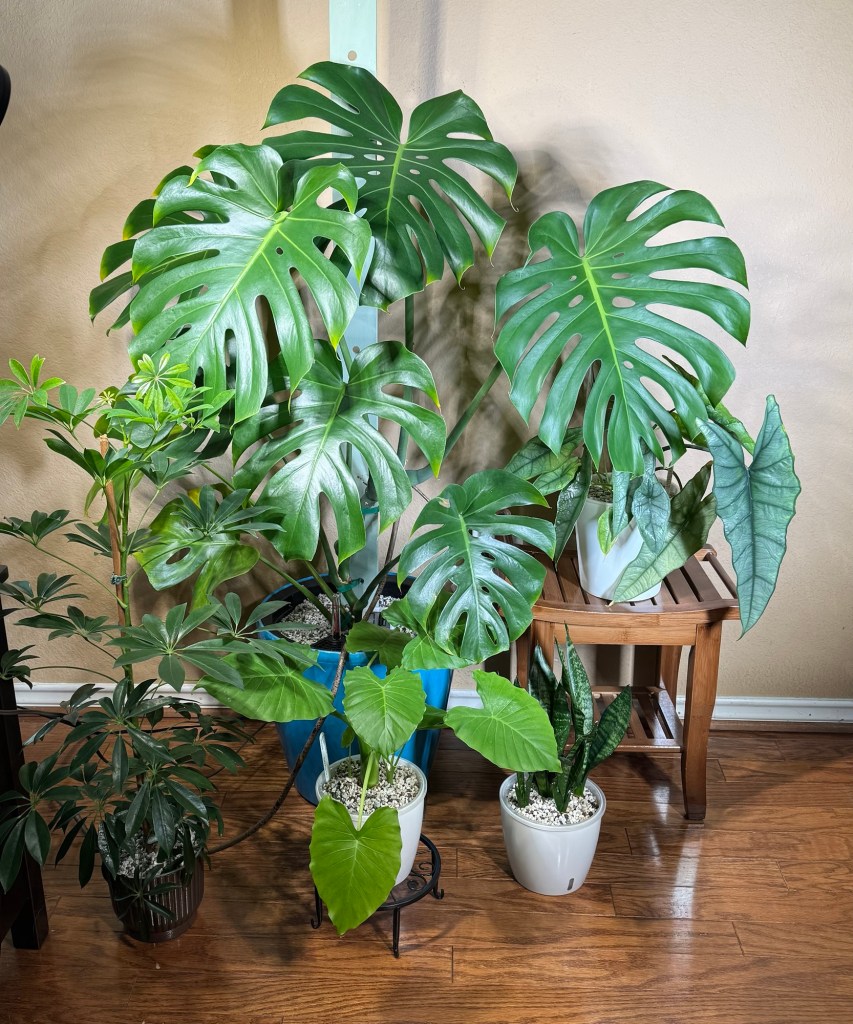
Meet Masha. My beautiful and rather large-ish Monstera. Masha lives in my living room with lots of grow lights. She has a 14″ pot and has lived in nothing but a volcanic rock substrate for almost a year and a half. I feed her General Hydroponics FloraNova Grow with TPS Silica Gold.
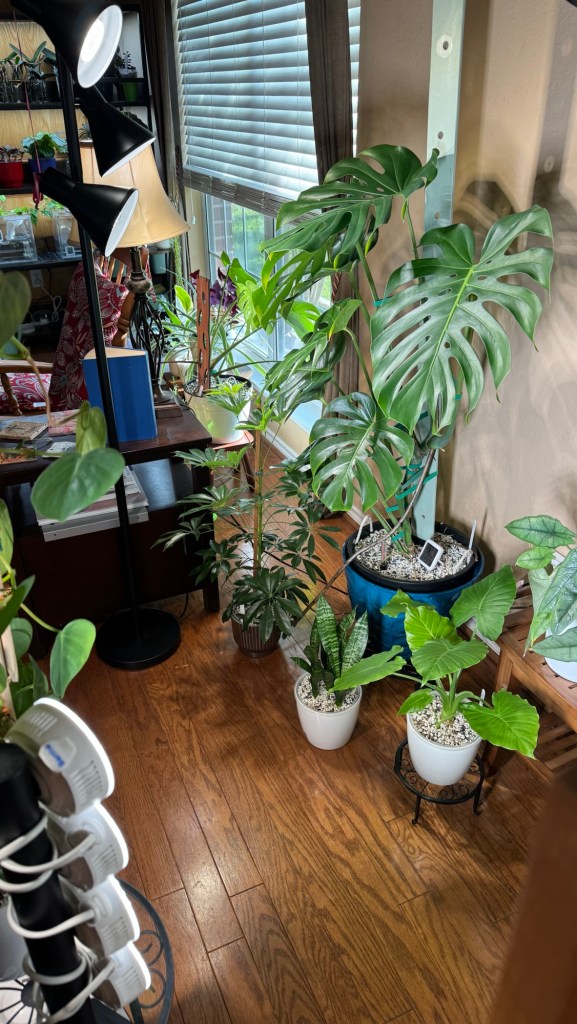
Let’s go five months back… Masha was growing fast enough that she broke her trellis.
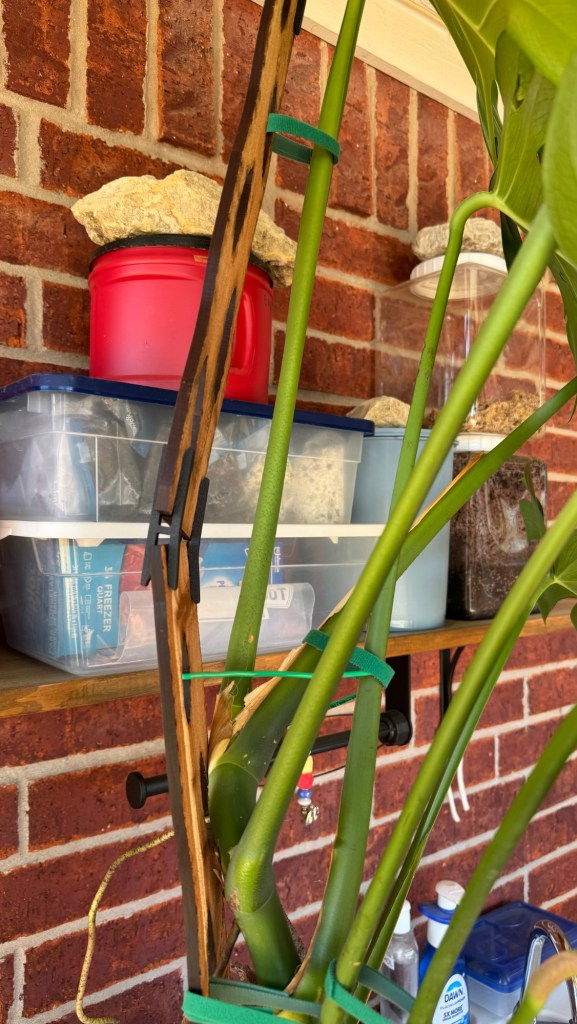
On top of that, I found that she was extremely root bound. I was unable to find a self-watering pot that would deliver that day, so I went to my local big box store and found what I needed to make my own self watering pot.
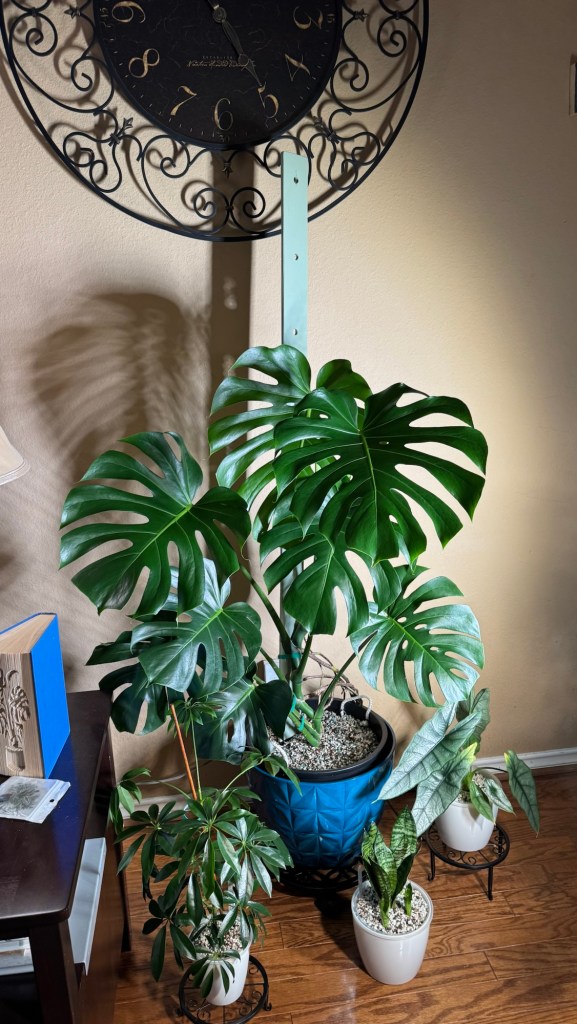
I thought all was going well until a few weeks ago… I thought I noticed the edges of Masha’s leaves curling under. I wasn’t quite sure how that could be, I made sure she had water and I had a meter to tell me when she had enough. But the signs were clear, so I watered her.
Masha seemed to be going through her water pretty quickly, but she had been very thirsty in her old pot, so that seemed normal. Fast forward a couple of weeks and still her leaves were curling under, and was that yellow on some edges and tips?
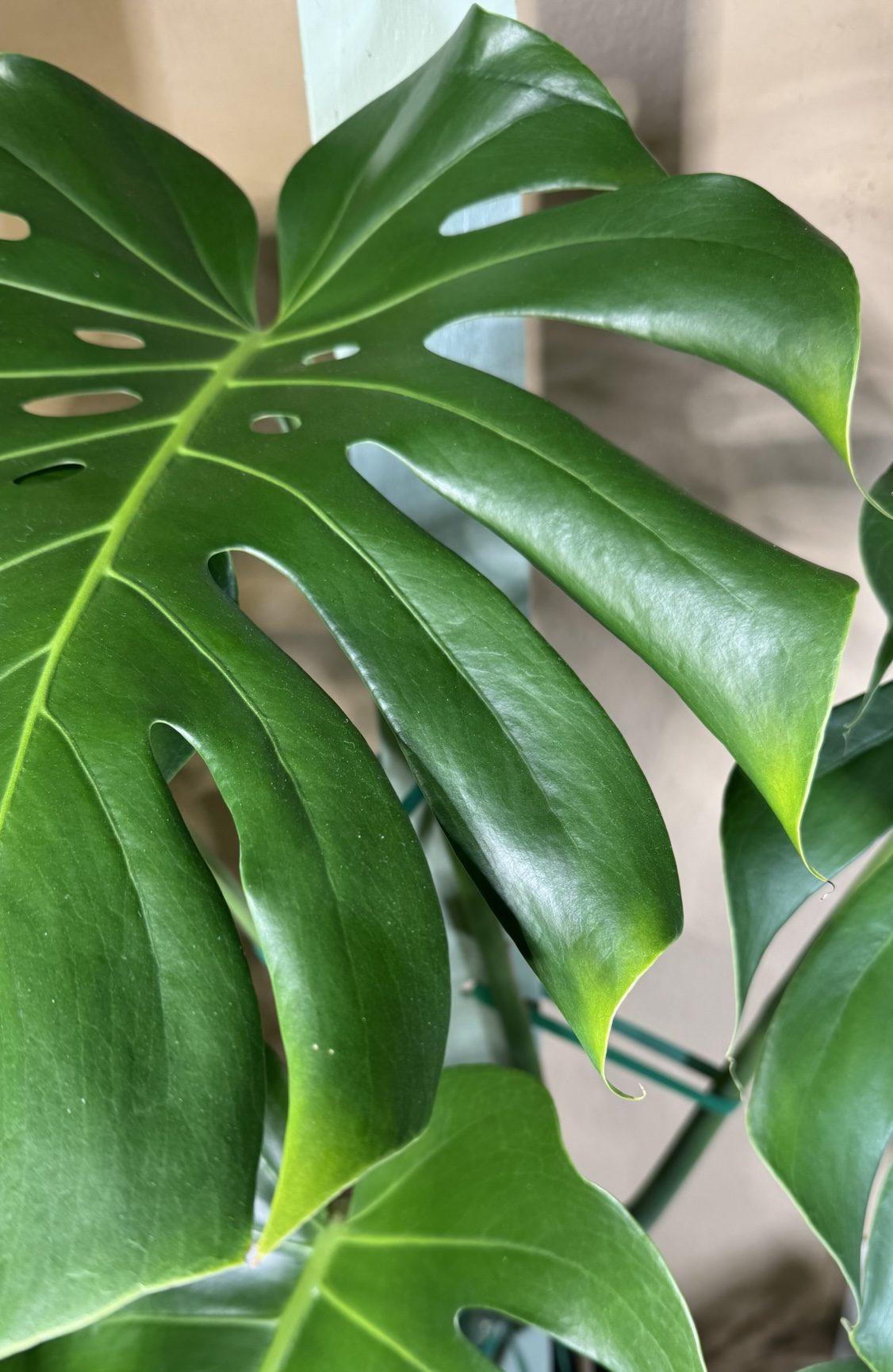
I couldn’t figure out what was going on, Fast forward another couple of weeks and the problem isn’t getting better. So I asked on the Monstera Rescue group on FB. The answers came back as a watering problem. Too much water to be precise.
As I said earlier in this post, Masha is a large Monstera in about a 14” pot; she is too heavy for me to lift and examine at the same time. So I enlisted the help of Mr. MyPlants to lift her for me so I could see what was going on down under.
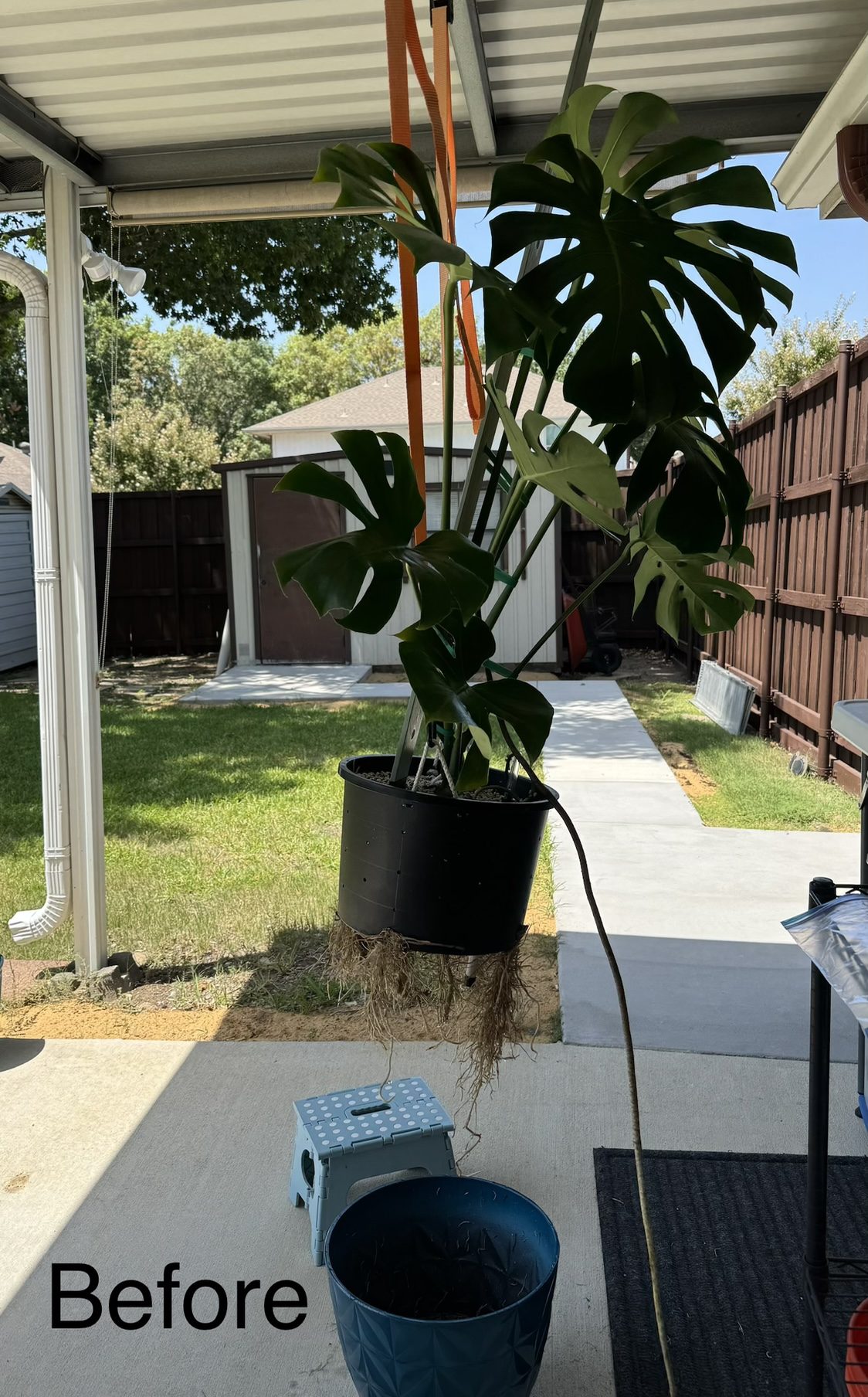
When he lifted her, I found that Masha had really been busy growing roots outside the bottom of the pot. A few of those (maybe around 5 or 6) were brown and mushy, but over all, they didn’t look bad. Then I smelled the water. It was dark and murky and smelled a bit like a neglected aquarium.
Because I needed a good amount of time to work on Masha, Mr. MyPlants took her outside and hung her from a beam over our patio.
After detangling the swirl of roots, I decided to trim them back. I knew that this represented less than 1/3 of her root system so I felt safe doing this.
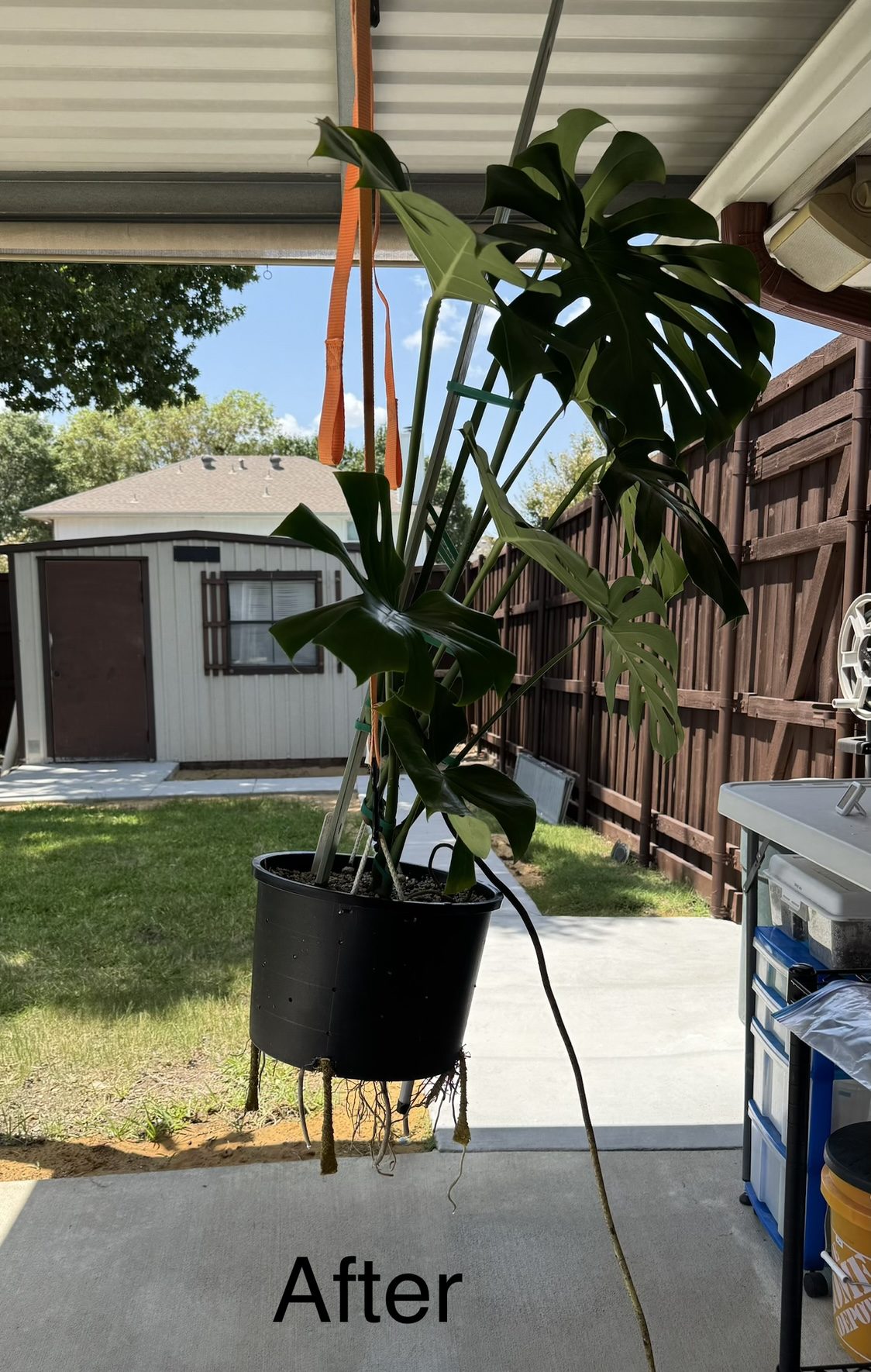
I also got rid of the murky water in her pot and flushed her substrate to make sure there wasn’t a mineral build up.
A couple more weeks passes and there was still no improvement; in fact, I think there was a little more yellow than before. She just did not seem to be happy in her homemade pot.
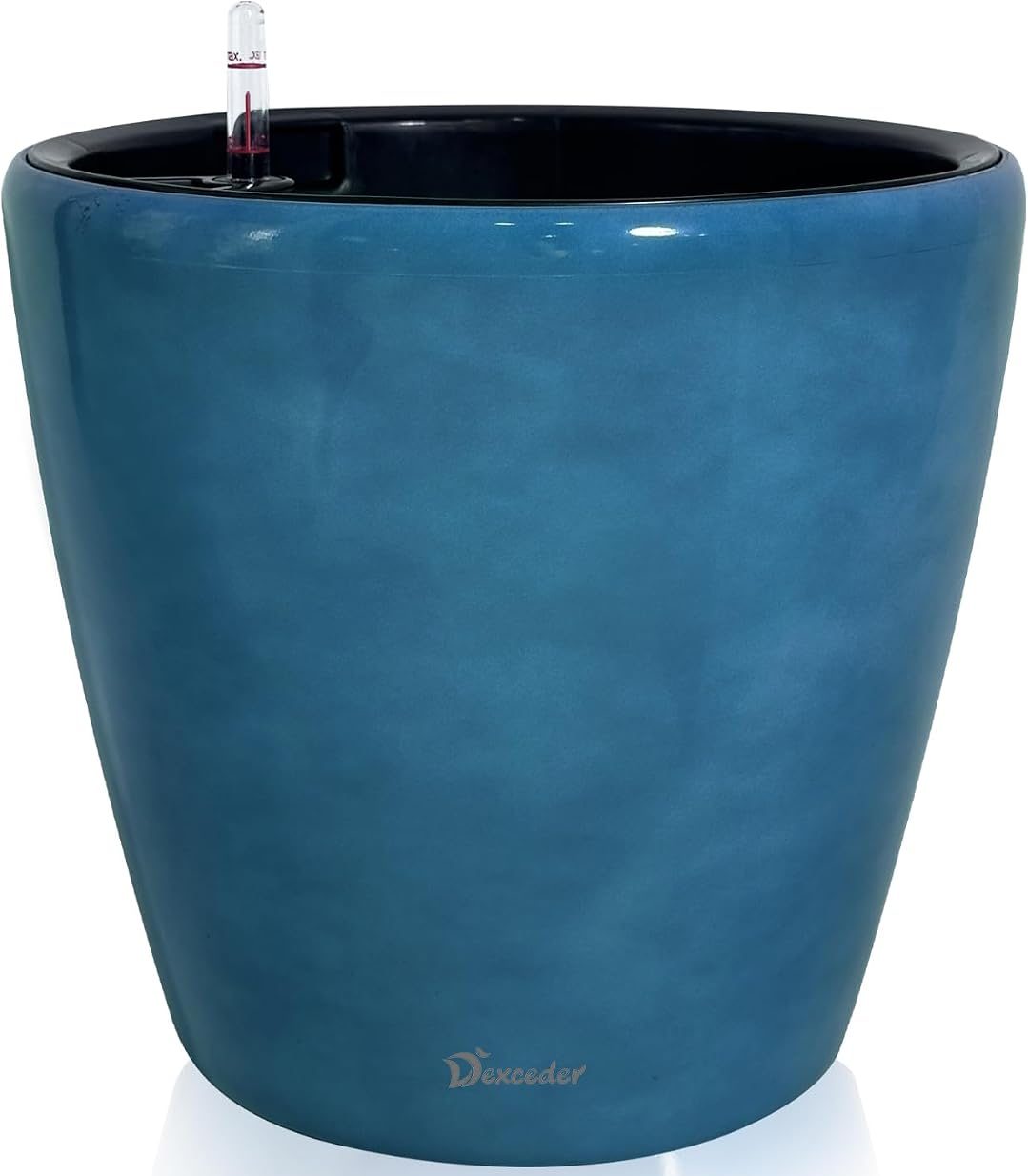
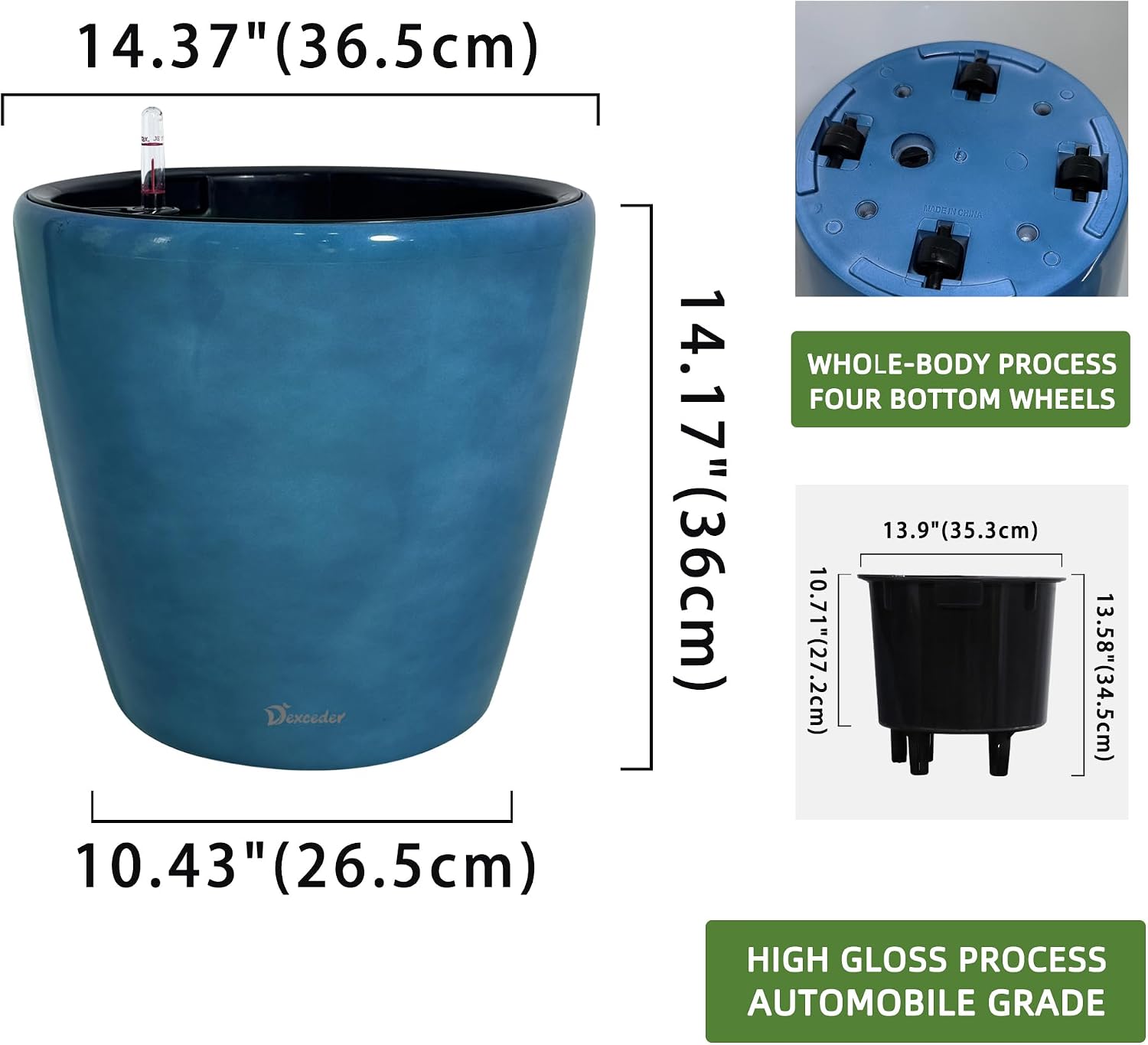
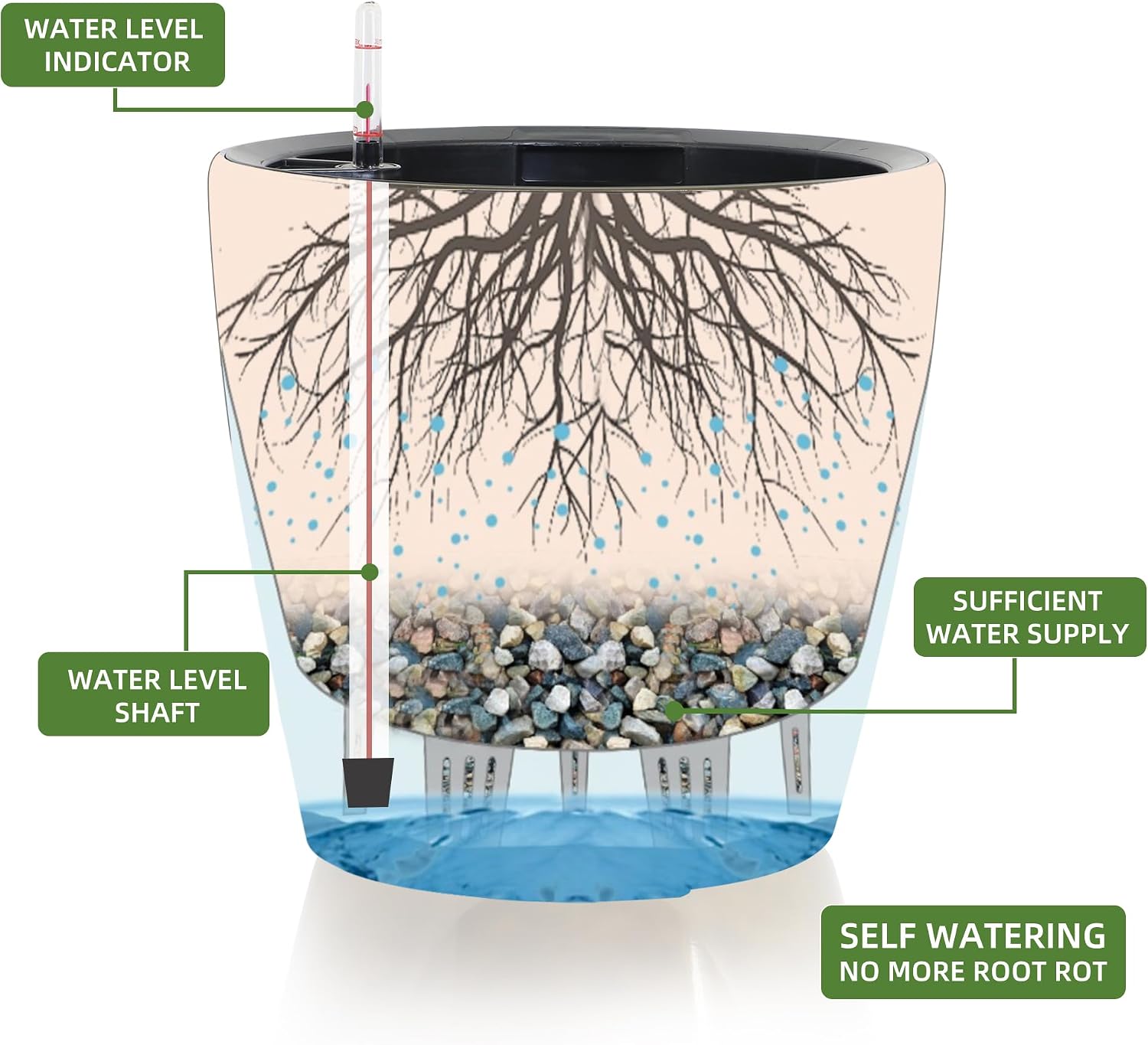
Since the problem seemed to be watering her before her reservoir was dry, and the pot I had her in was just too big to deal with, I began looking for a real self-watering pot that was large enough for her. I landed on a Dexceder 15″x14” pot. The advantage of this pot is that it is made to be self-watering. There was no drilling, no blocking drainage holes that were too large, no searching for something to hold her pot above the reservoir, and no wicking.
Now it was time to really see what was going on with Masha’s roots. Her pot was dry so I laid out a tarp and a large plastic tray to catch all of the mineral substrate that was going to be pouring out when I dumped her pot.
It took a little squeezing and rolling around to get Mash out of her homemade pot, but with the help of Mr. MyPlants she was soon out of the pot and lying on the floor.
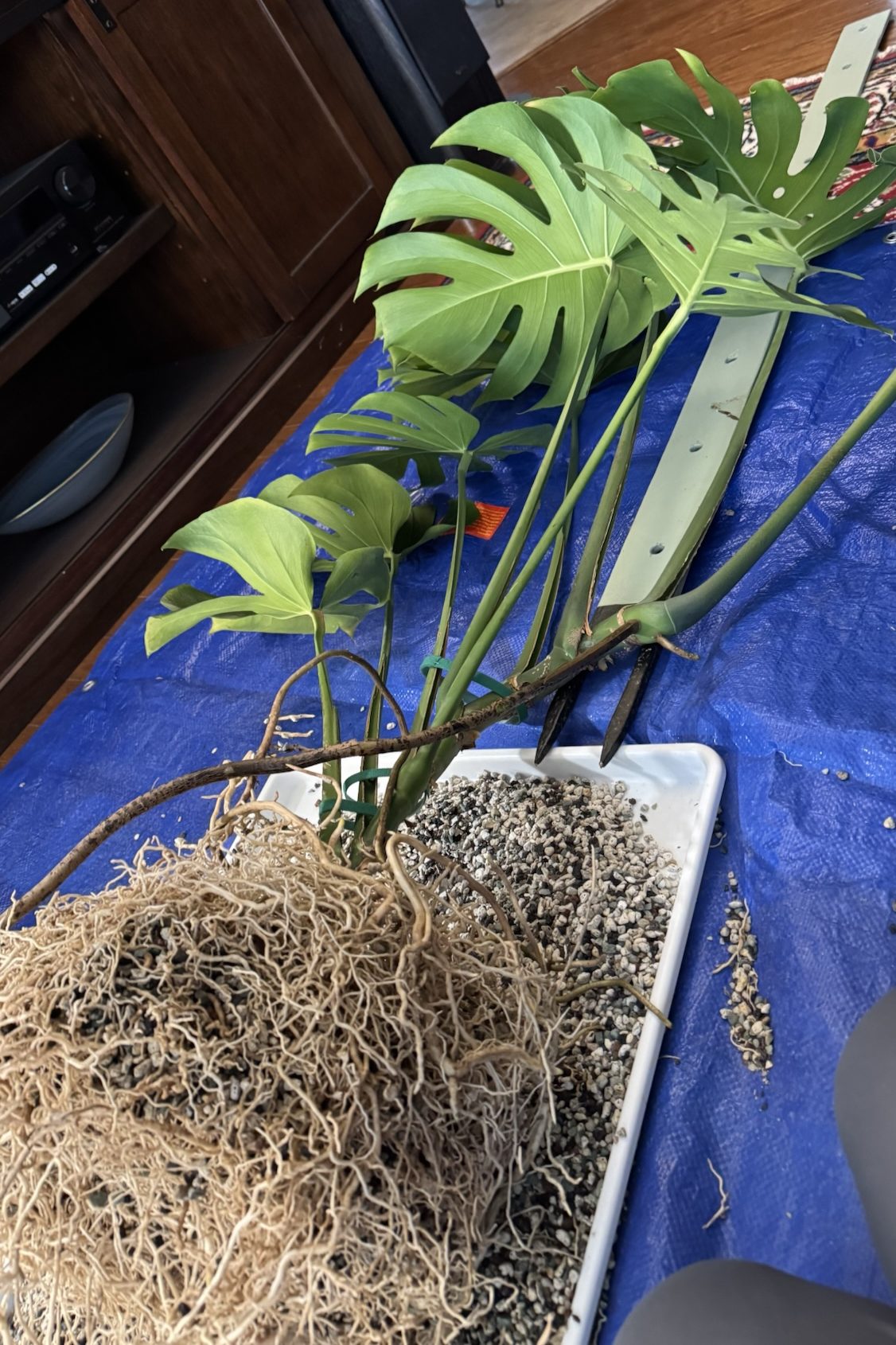
Once again, she had a ton of roots and her root-ball was a little large for the new pot, so I began the process of loosening, unwinding and elongating the ball so it would fit. One of the things I like about this pot is that it relies on the capillary action of the rock substrate to move water up into the pot; there is no need to have a wick.
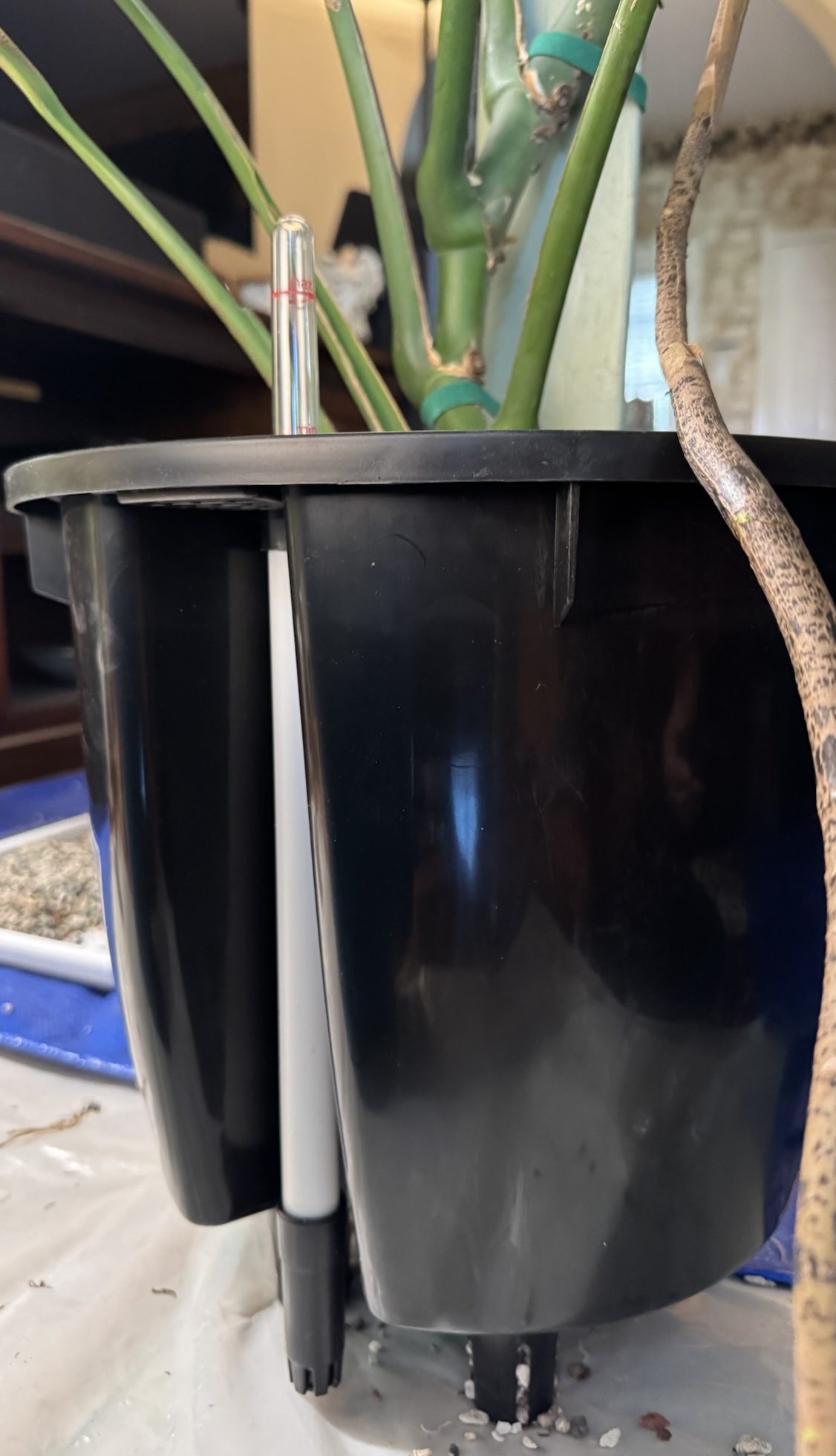
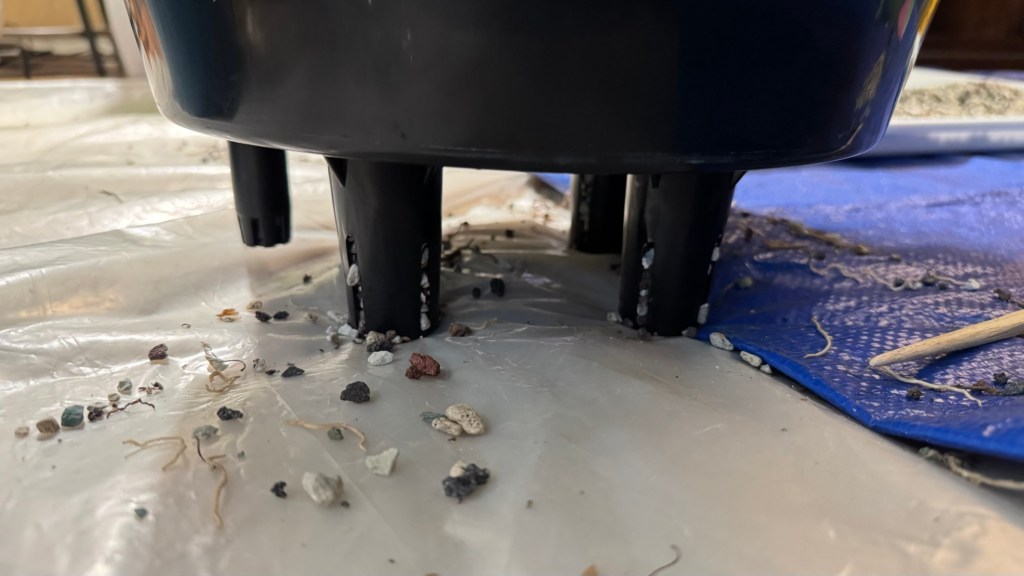
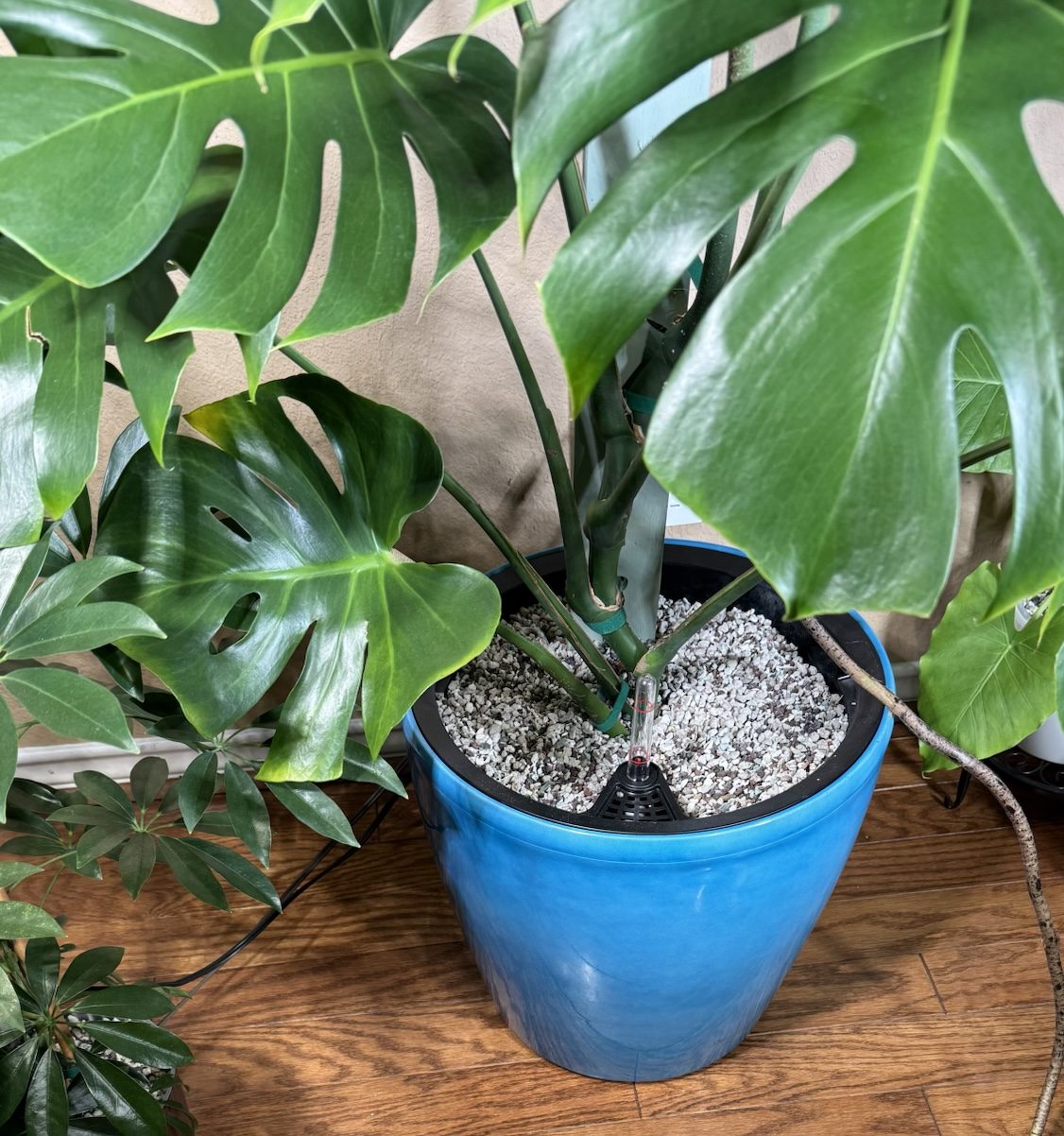
The water gauge made it a bit of a squeeze to get her into the new pot, but I was able to get her in on the second try. It’s been a couple of weeks since she went into the new pot and I think she might be looking a little less yellow around the edges. I’ll keep you posted!
 my Plants
Leave a comment