
So Many Rabbit Holes
When I bought my first Alocasia, an Alocasia Dragon Scale, I knew wanted to grow it in Pon, which is a mix made from volcanic rocks. Many of the content creators I follow said that Alocasias do well in Semi-Hydro, but their methods differ. Some people use glass jars with leca (lightweight expanded clay aggregate) at the bottom and PON or sphagnum moss on top. Others combine Pon with Perlite or use nursery pots in catch-pots without drain holes or self-watering pots. There are many ways to care for our green friends, and everyone has their favorites.

For me, I wanted something affordable and simple, so I chose Pon in self-watering pots. My first step was ordering Pon and some self-watering pots. Sounds simple, right? But this led me on a long search. When people mention Pon, they usually mean Lechuza Pon. It costs about $45 for 18 liters, but if I order from Lechuza in mid-September, I won’t get it until November. I could buy it on Amazon for $55 for 6 liters and get it between October 7-29. Ugh.
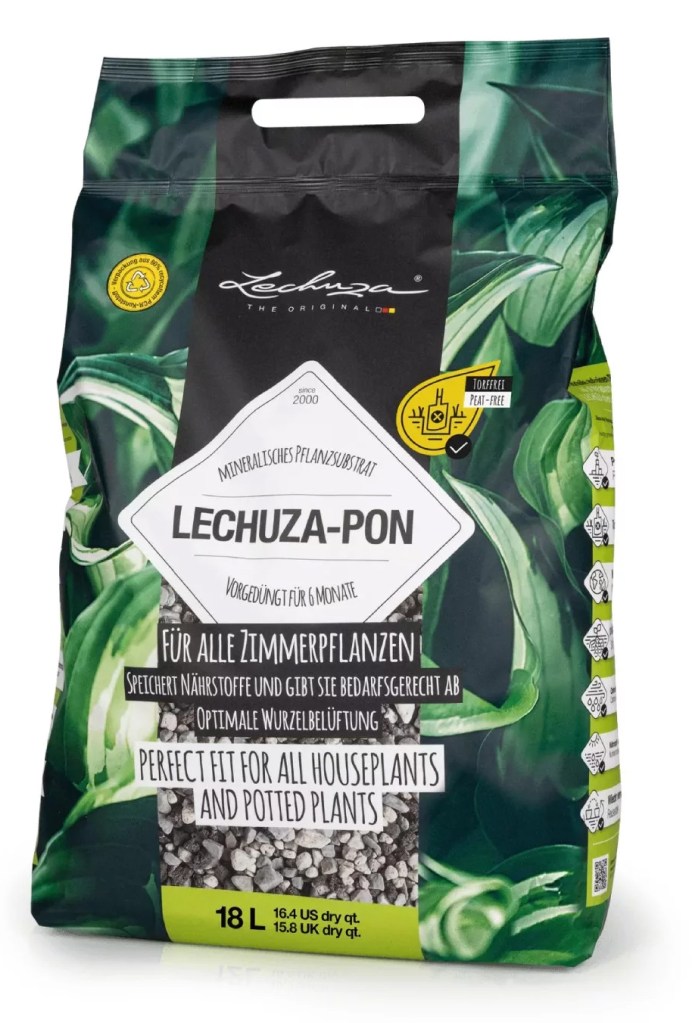
This drove me explore different Pon recipes. I found one I liked on the Plants by Melissa YouTube channel. I liked that she started with Lechuza PON and separated the different types of rock from it to determine her recipe. I also liked that her DIY mix allowed me to choose my own fertilizer, unlike Lechuza Pon, which already has some in it.
PON RECIPE
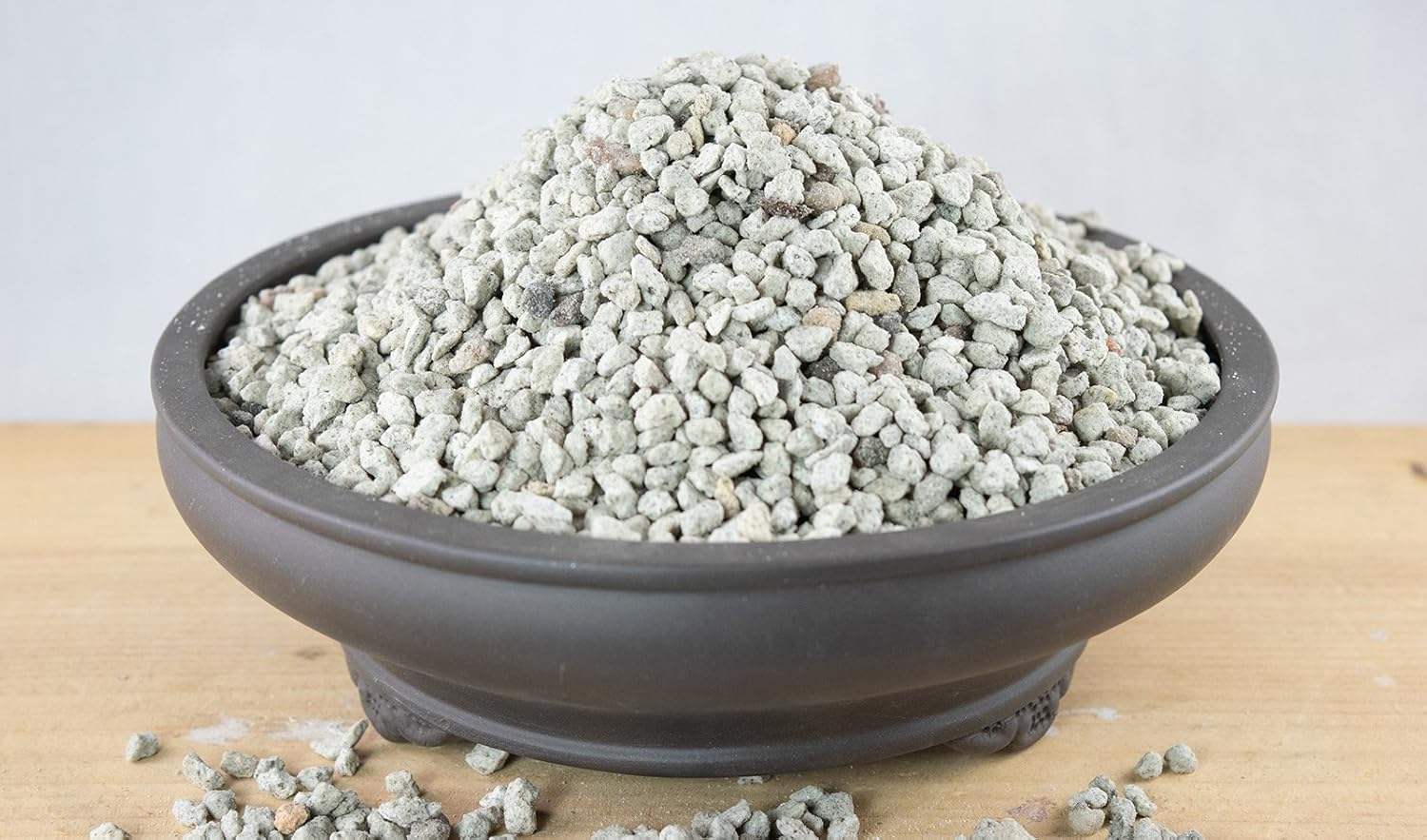
2 Parts Pumice
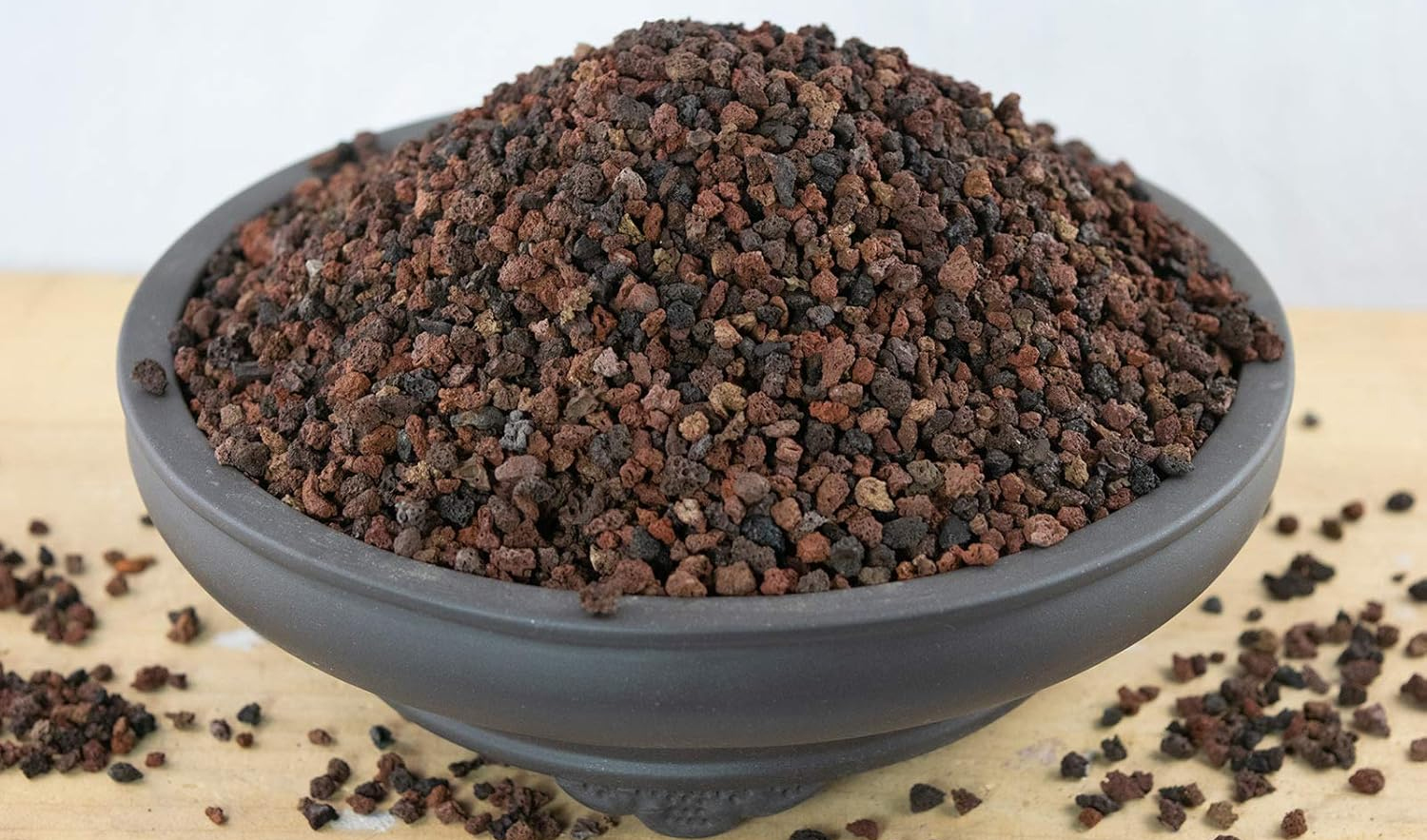
1 Part Red, or Red & Black Lava Rock
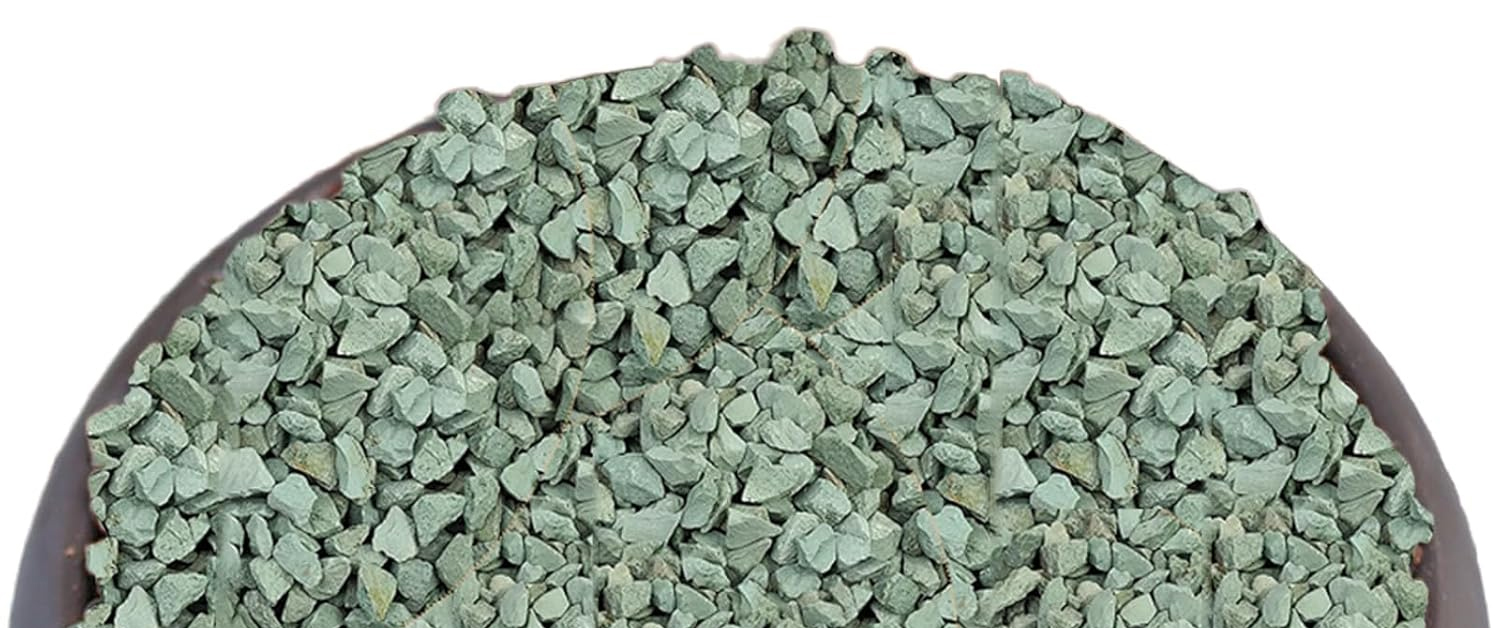
1 Part Zeolite
All rock should be 1/8″ (3mm) – 3/16″ (5mm) grit
Next, I needed to find self-watering pots. A search for “self watering pots for indoor plants” on Amazon shows over 2,000 options. Here we go again! There are many types of self-watering pots. (For my purposes, I’ll refer to them as Type 1, 2, or 3.) Some have a single pot with a divider for separating the substrate from the water reservoir (Type 1). Others have an inner basket on legs that sits in the reservoir (Type 3), or a basket above the reservoir with a wick reaching down (Type 2).
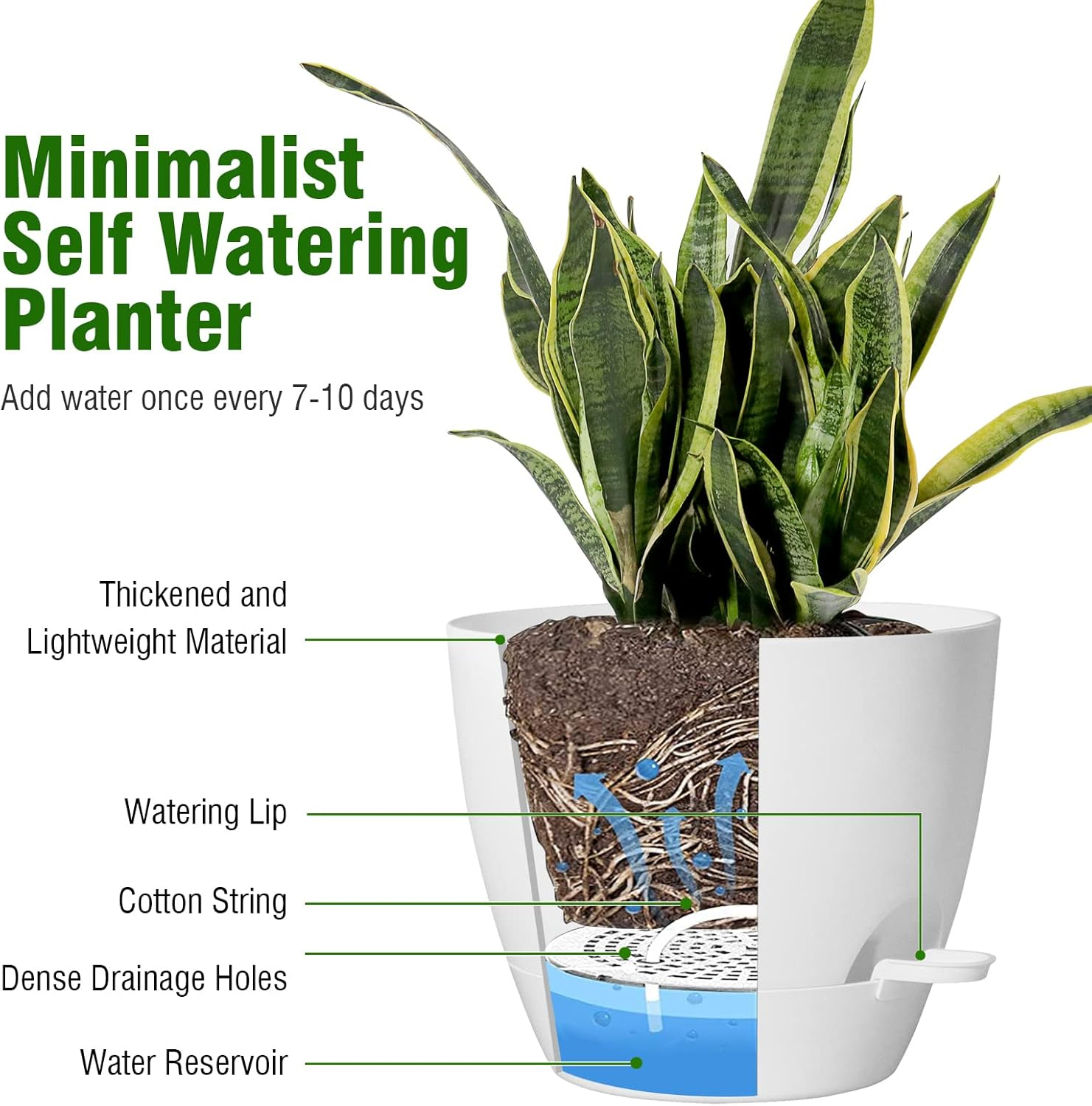
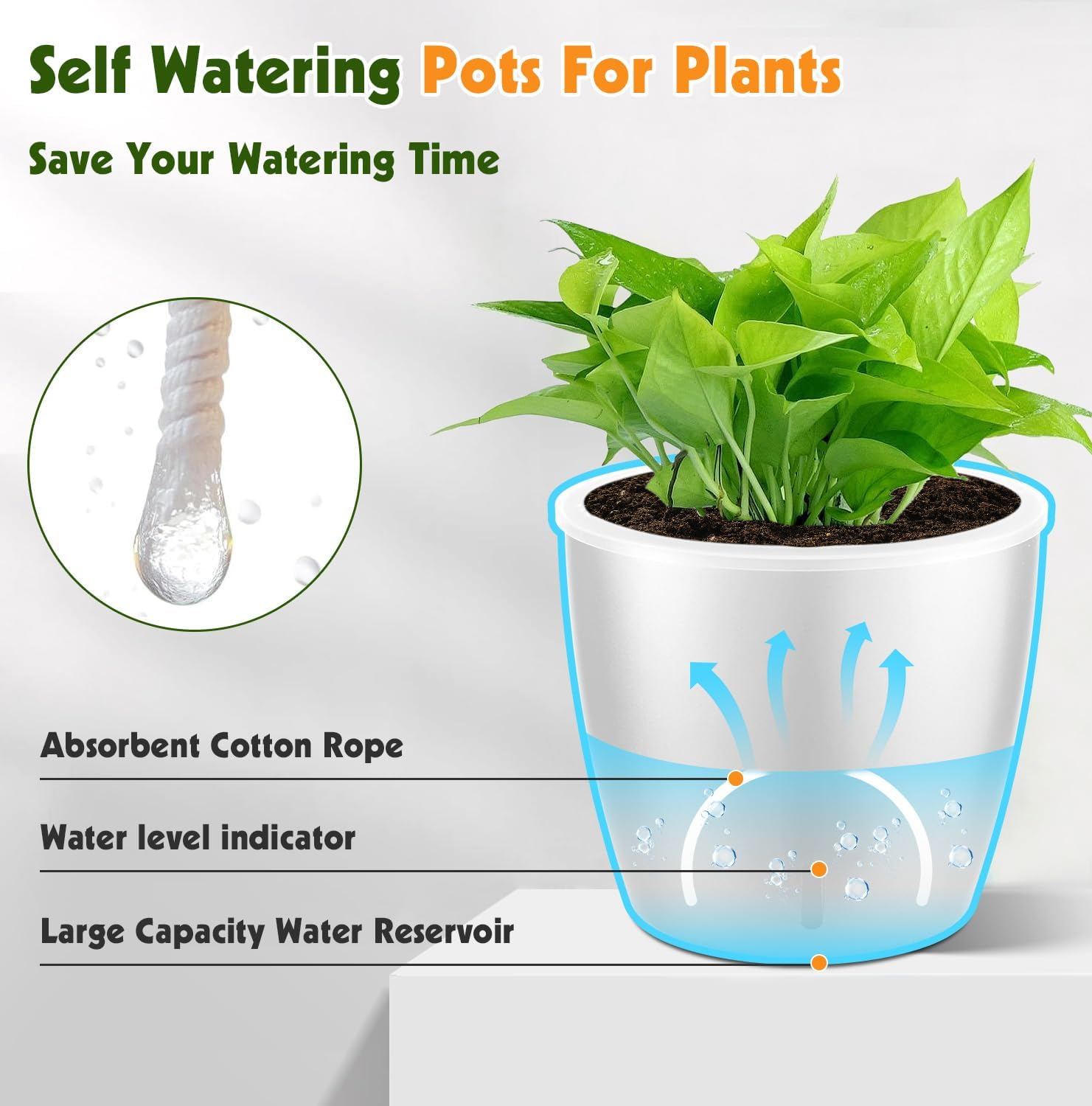
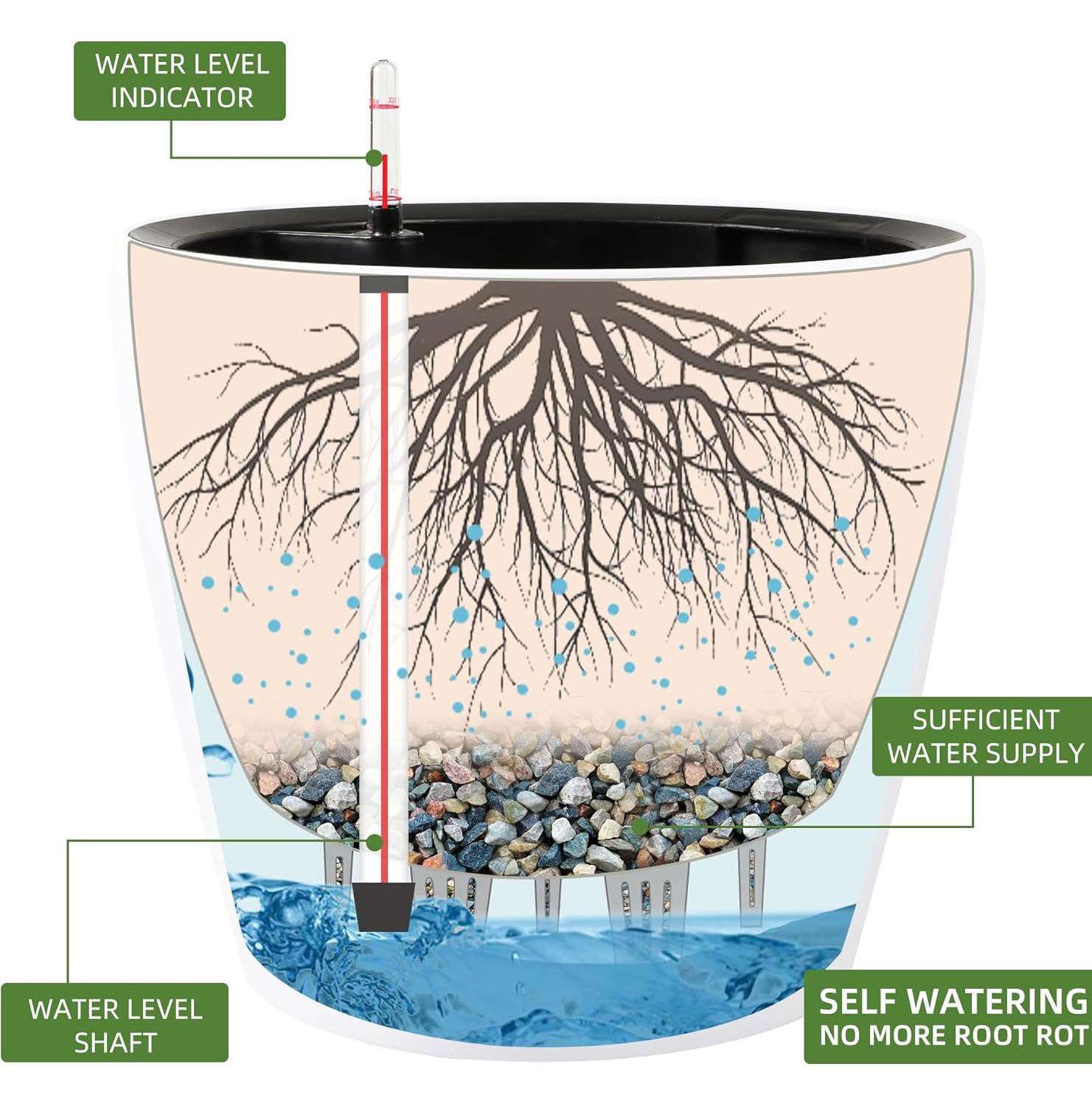
Right now, I prefer the pots with a clear inner pot and a wick (above center), especially if they have a clear water level window. Most pots with water level meters use a design that gets stuck, making it hard to see the water level. I found some that use a foam ball design instead, which works much better, but they can be tricky to find. One last thing to mention is that many pots with water-level meters have black inner baskets, while most wick pots have clear inner baskets that let you see the roots.
Here are some pots that I like:

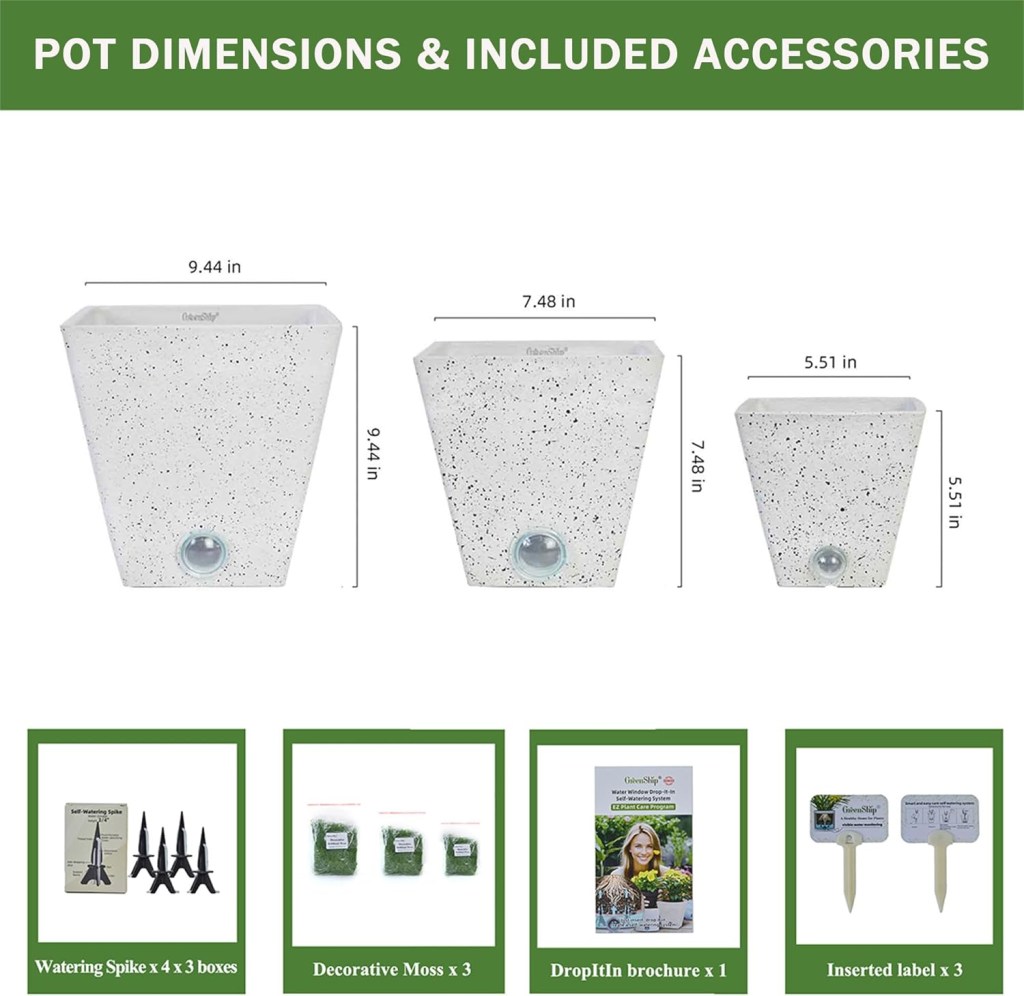
5″ and 6.7″ – These are my go-to pots
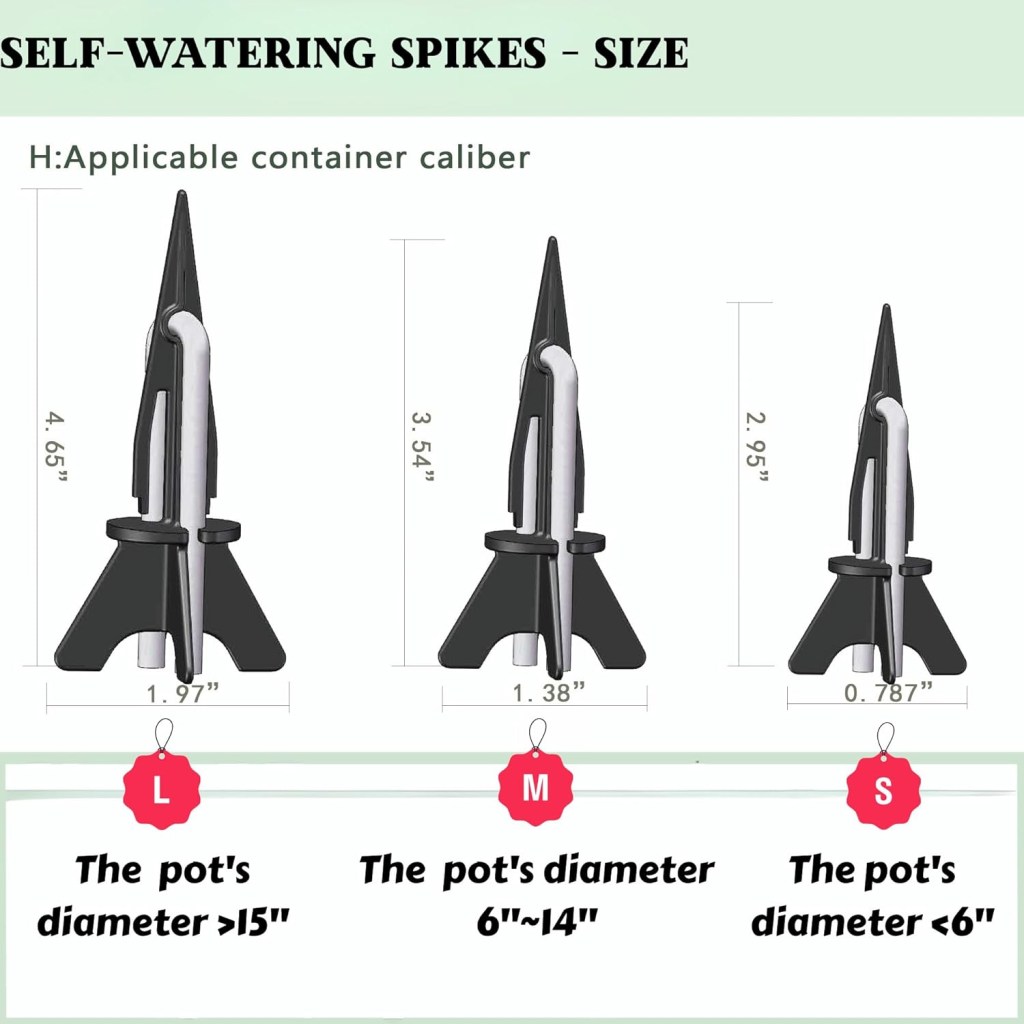
Self-Watering Spikes – These spikes can turn a nursery pot into a self-watering inner pot when matched with a non-draining outer pot. They hold the inner pot up and allow for a wick to be threaded into it.
Greenship Planters – Non-draining planters to use with self-watering spikes and generic nursery pots
What I’ve Learned
It has been my experience that Alocasias can thrive in PON. They can also crash and burn. Very quickly. My Alocasia Dragon Scale was living it’s best life, until it wasn’t. Many of my Alocasias and Monsteras drip “water” from their leaves, and this is usually perfectly normal.
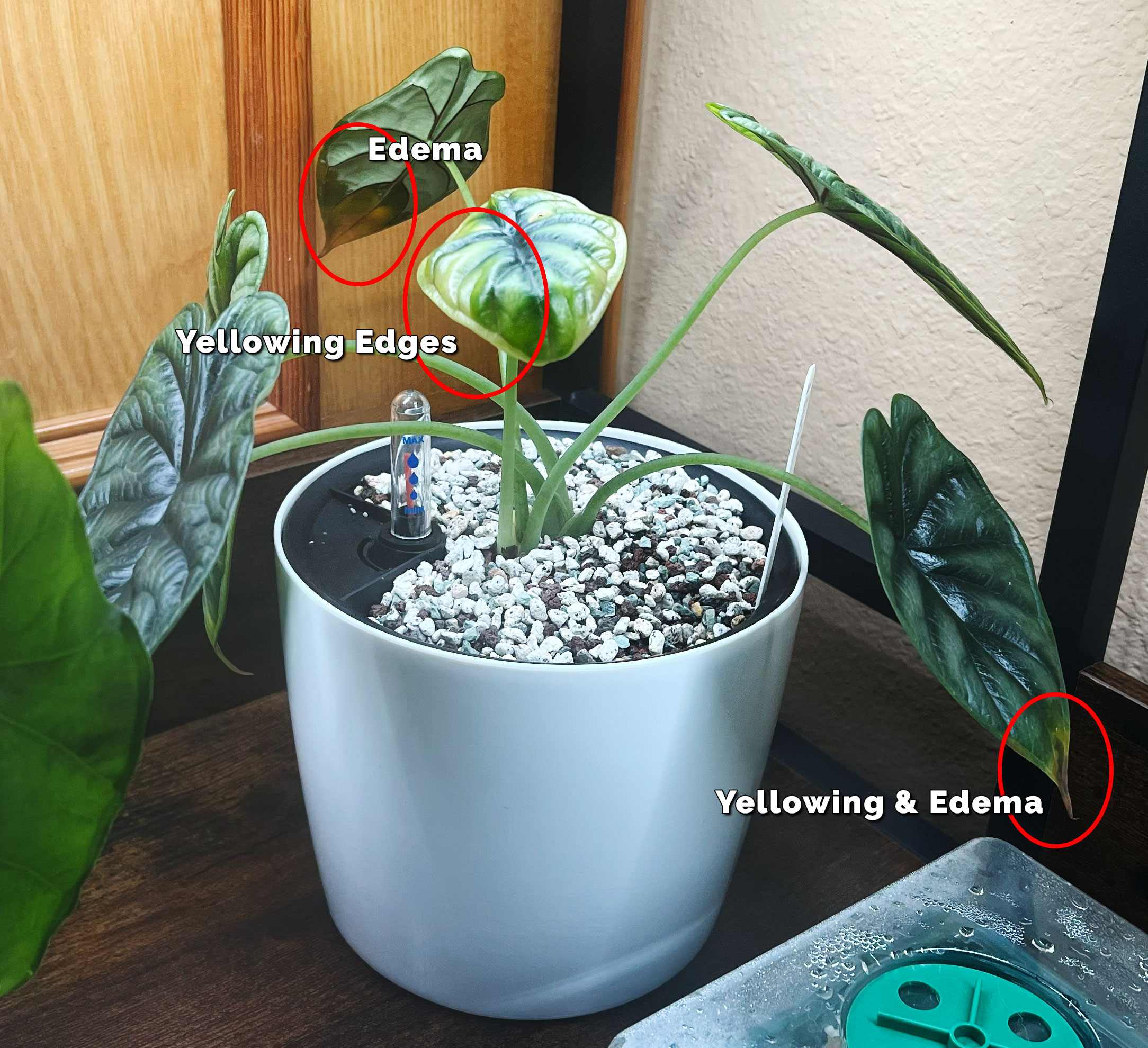
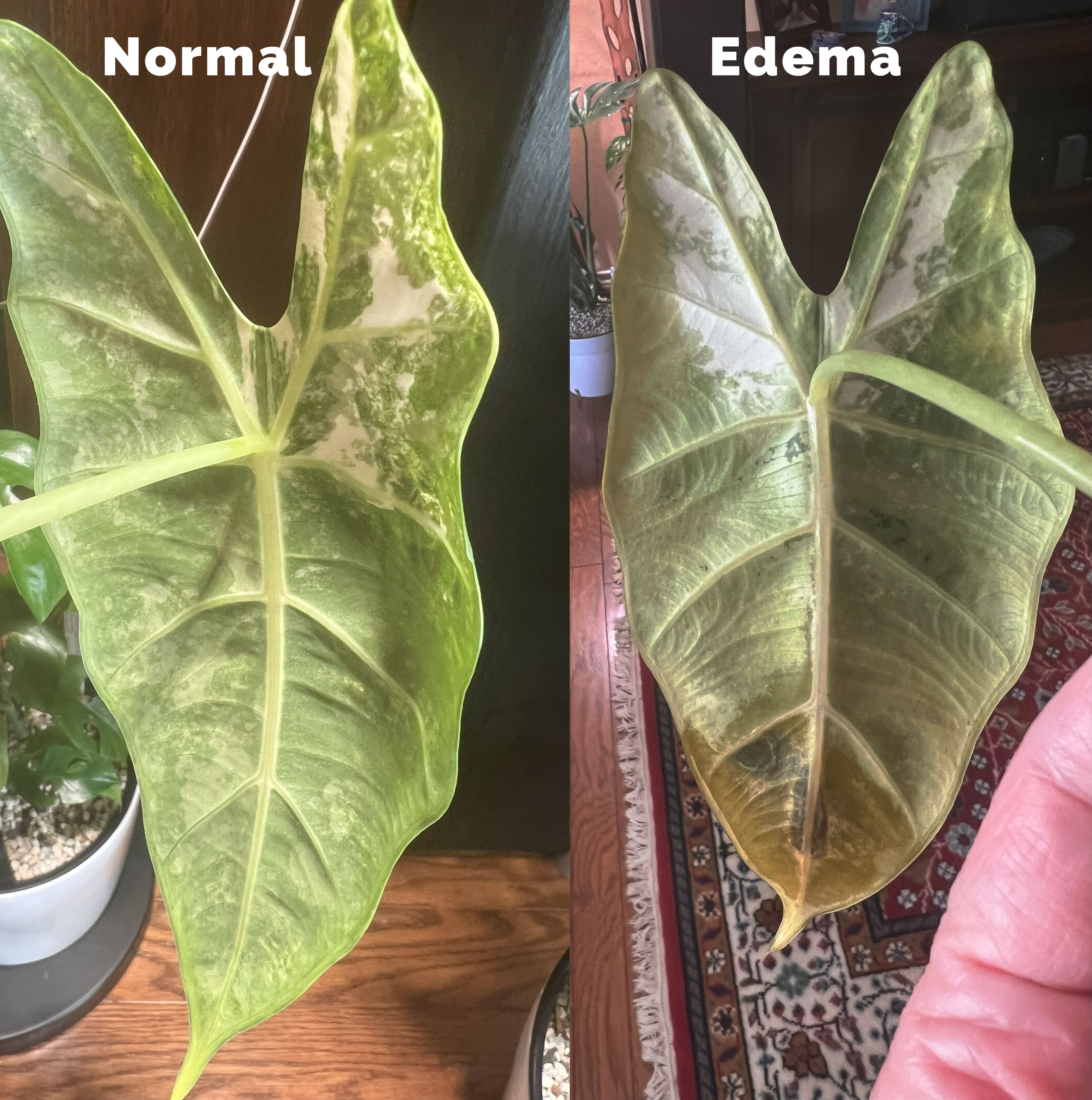
In June, I noticed that the newest leaf had a yellow spot that started small and spread. By early July, some of the other leaves had yellowing and what I recognize now to be edema. Edema occurs when the roots have too much water and the water goes to the leaves. When the cells on the leaf are unable to hold all of the water, they swell and burst leaving the leaf tissue thin and a little transparent. Since the plant was in a self-watering pot, I didn’t see how I could have overwatered it, but the winding wicks made it possible.
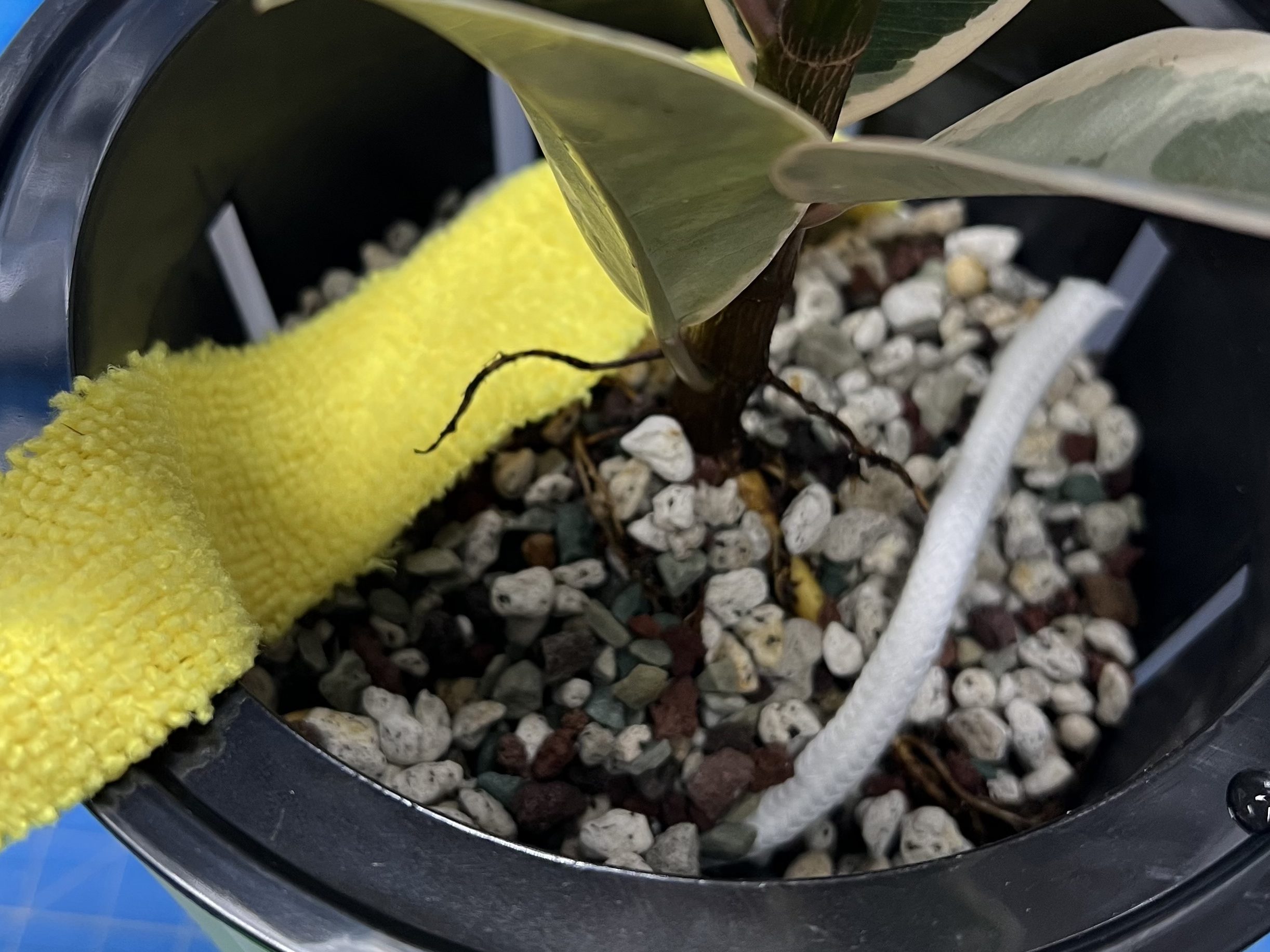
While I was researching repotting in PON, I saw 2 videos that doomed my Dragon Scale. In one, the content creator used strips of microfiber for wicks. In the other video, the content creator wound the wick up through the pot to bring water higher in the pot. Both seemed like good and logical ideas, so that’s what I did.
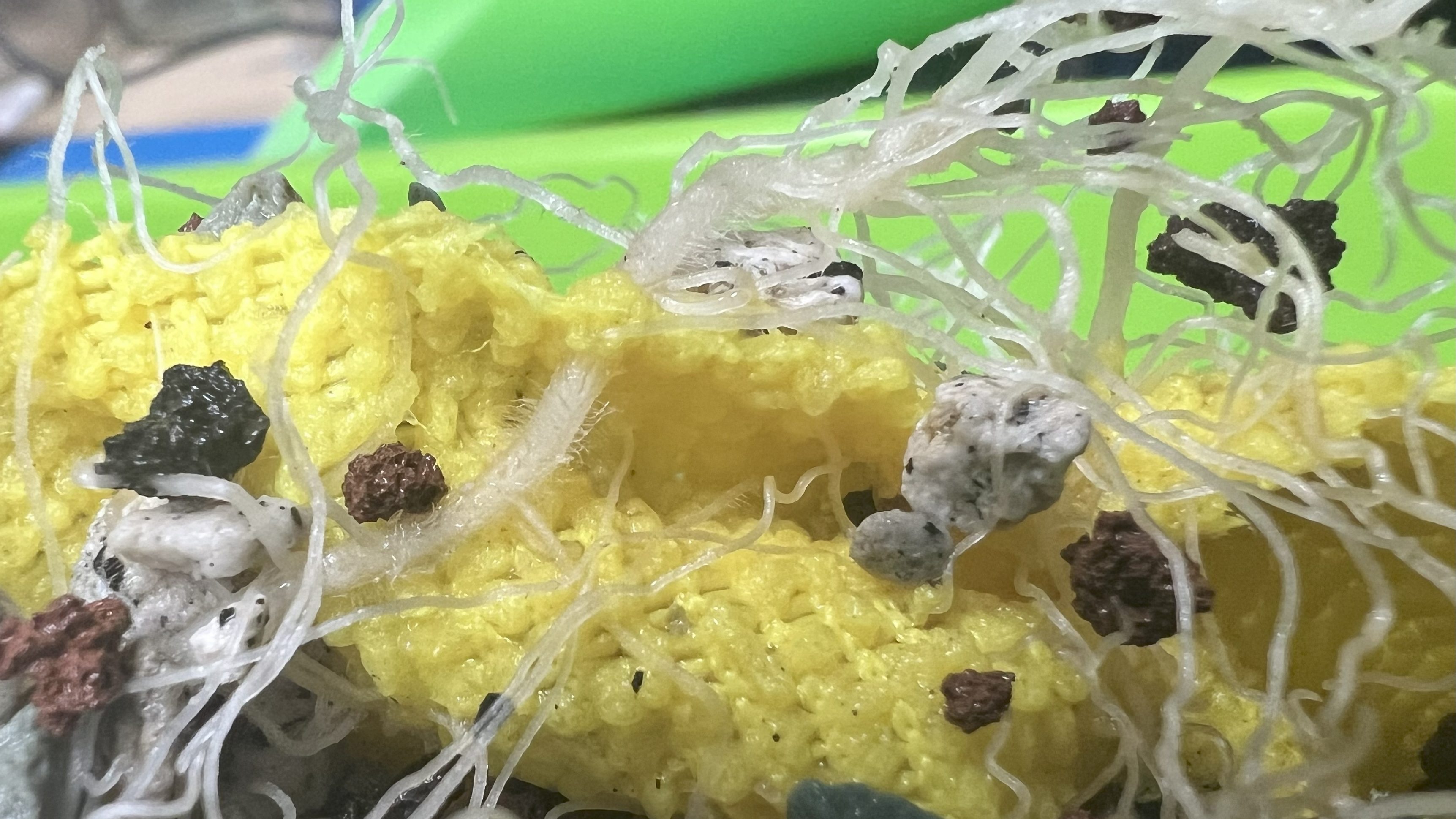
The problem with the microfiber is that the roots grow through the fabric which makes repotting difficult. I’ll never do that again. The problem with winding the wick through the substrate, at least for Alocasias, is that it draws too much water into the substrate, which eventually causes over-watering and root rot. If left alone, root rot can spread to the stem.
At the end of July, we left on a two week vacation. Before we left, I topped off my self-watering pots and sealed the fate of my Dragon Scale. By the time we got home, there was nothing I could do but cut the remaining leaves off. But there was worse news, under the base of the petioles the rhizome was mushy. I scraped off the mushy part and replanted in PON with a properly installed wick. I’m still waiting to see if it will grow back.
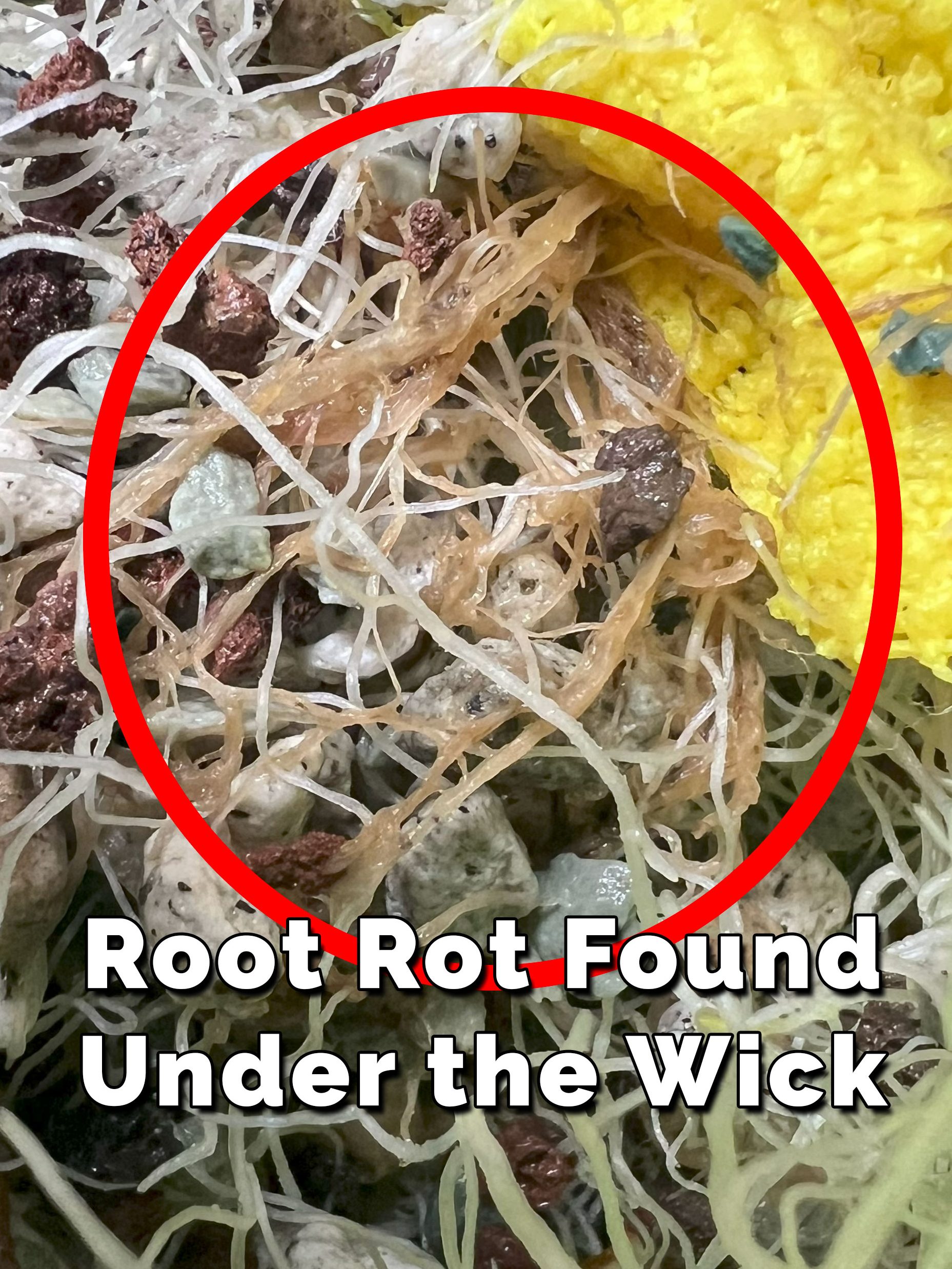
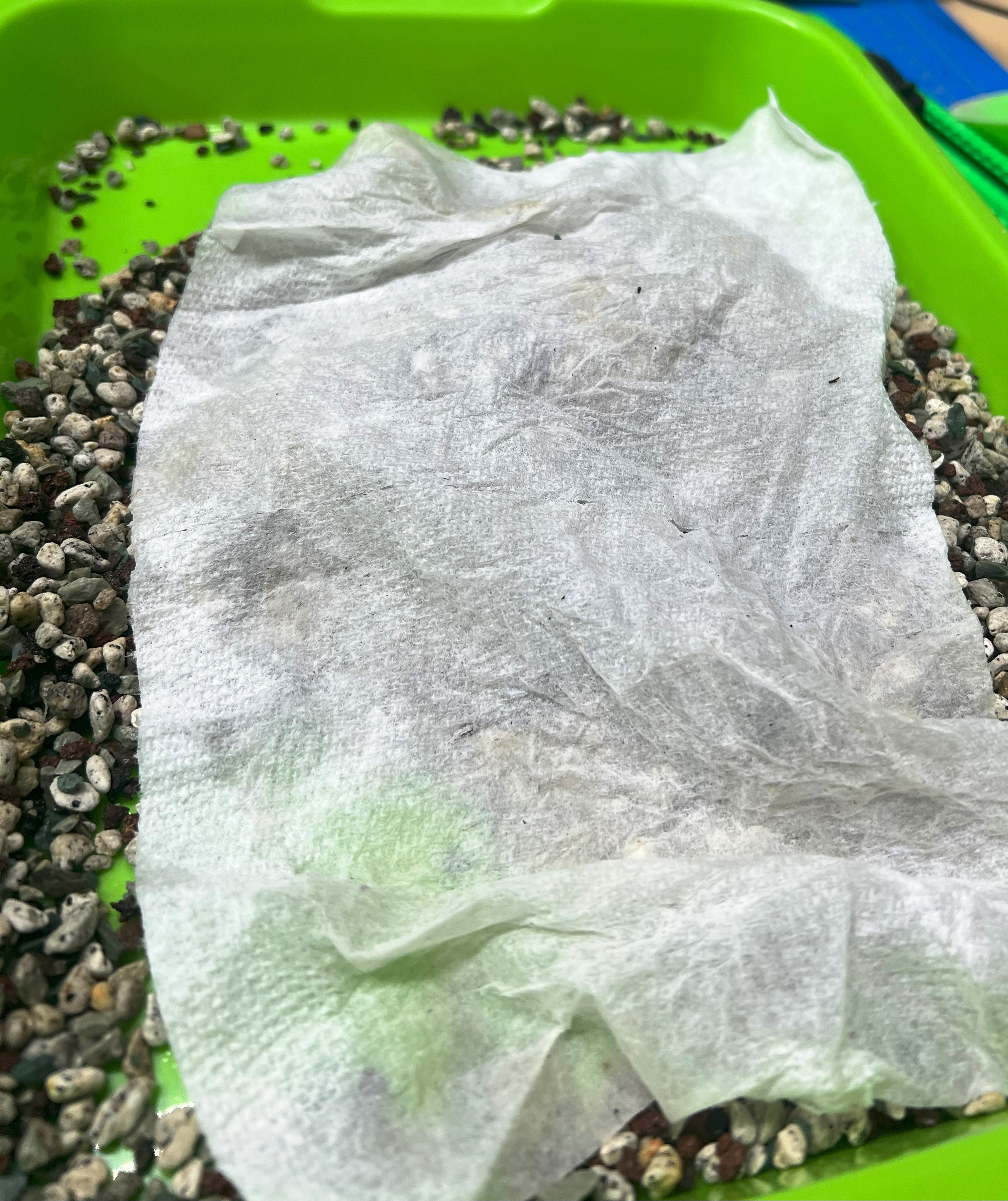
Today I unwound the wicks on two other Alocasias. One of them was an Alocasia Dragon’s Breath and when I pulled a piece of the microfiber wick away, I found the beginning of root rot. I also realized just how wet the PON was with the wicks winding up through it. I took a paper towel and laid it out on the PON and pressed it into the rocks and discovered a lot of water. This was not just at the bottom, but pretty much throughout all of the PON.
The bottom line is that I will no longer wind wicks into the substrate and I won’t add wicks when the inner pot has legs. On plants that don’t like to be too moist, I’ll only fill the reservoir about 1/2 full, and I’ll do that mostly from the bottom.
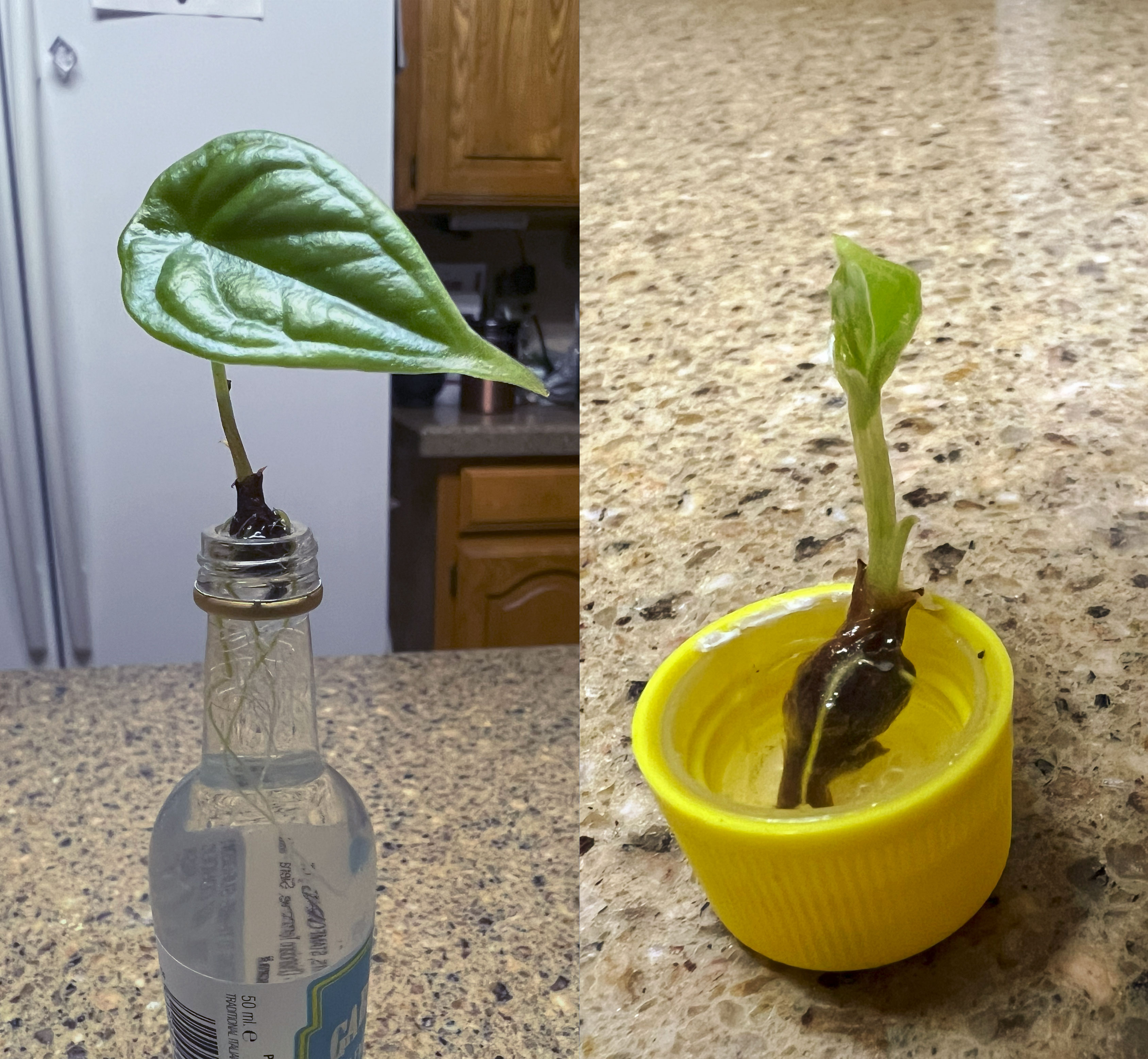
There was one bright side to the story, and that is that I found two corms in the rotting roots and both have propagated and have new leaves coming on.
The moral of my story is to believe what your plants are telling you. If something looks wrong, there is probably something wrong. While yellowing can be natural when a plant sheds its oldest leaf, it can also mean it’s too dry, rootbound, or too moist. As I live with and learn about my plant’s needs, I am beginning to understand their language. I have also found some Alocasia groups on Facebook that are very helpful when I’m not sure what is going on with one of my babies.
I know this has been a very long post, but I do hope it will help someone else one of these days.


 my Plants
Leave a comment