
Over the past three months, life has been crazy and I’ve barely had time to care for my plants, let alone document and write about them. During this time, six of my friends, my husband and I put together a one-act play and took it to Edinburgh, Scotland’s Festival Fringe for eight days. My part consisted of making all of the costumes and props and managing all of that back stage. After our stay in Edinburgh, my husband and I took a train to London where we spent an additional 5 days. It was a great experience that took almost all of my time, but that’s not what this site is about, so let’s move on to the major changes since my June, 2025 post.
Unfortunately, two of my plants did not fare well while we were away:
Alais (Phalaenopsis Fuller’s Gold Stripe)
Alais had been struggling for quite some time due to root loss. When we left, she only had one new root that reached the water. While it’s normal for an orchid to lose roots while new water roots are growing in, Alais never really adjusted to water culture. My best guess is that I moved her too quickly into water. I have now refined my method to something that works better: Start with short lengths of wet and dry days and slowly increase the wet days working toward 6 wet/1 dry.
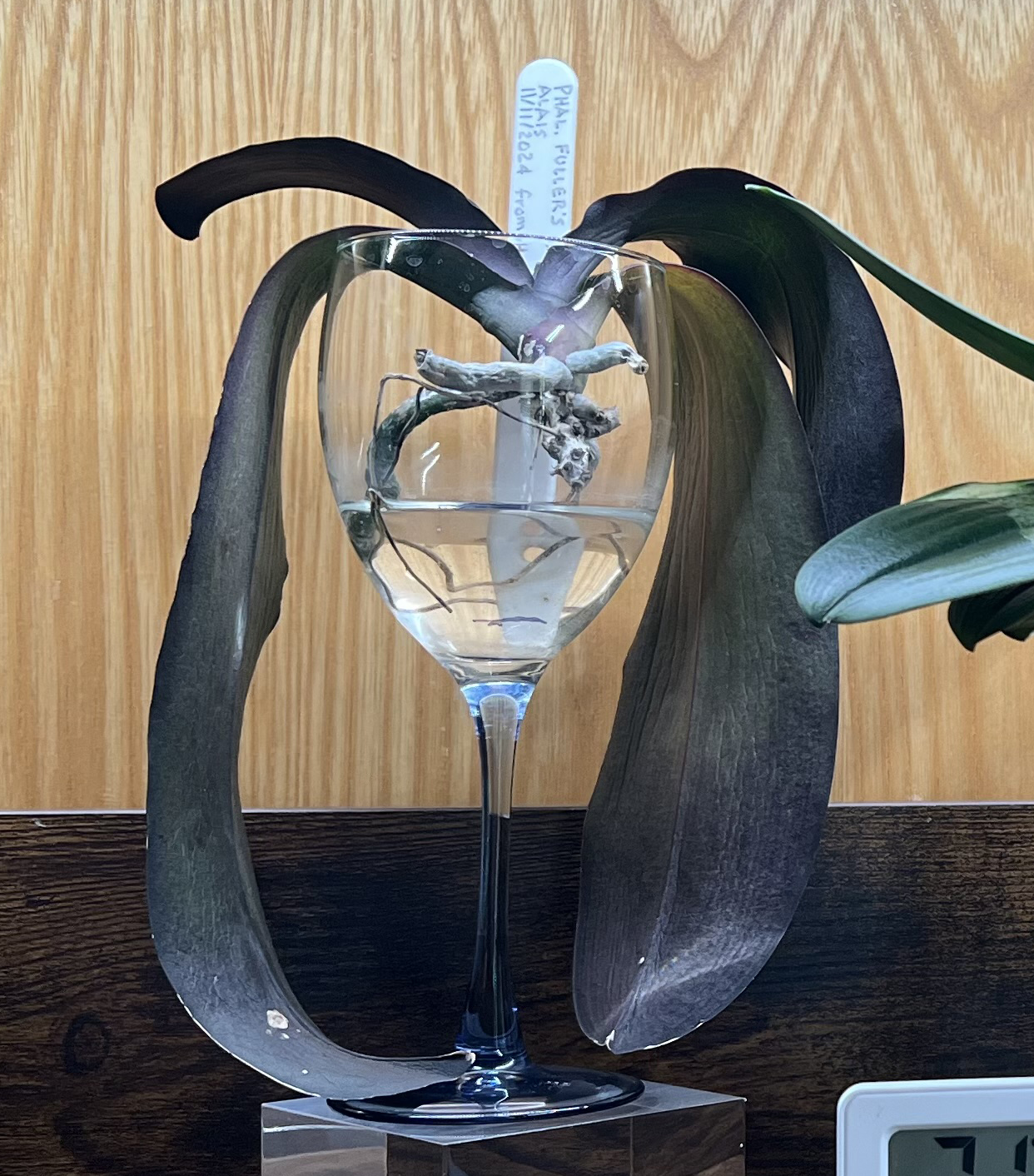

While we were away, Alais had a major crisis and lost all of her leaves. My niece, believing she was dead, stopped watering her. By the time we got home, her roots were very dry and withered. As a last effort, I added some water to her glass and her roots greened up, but her stem was very dry and hard. I have no idea if she has any life left in her, but I’m trying. I’m keeping her watered and providing root stimulator. I doubt she’ll make it, but I’m going to keep trying.
Drogon (Alocasia Dragon Scale)
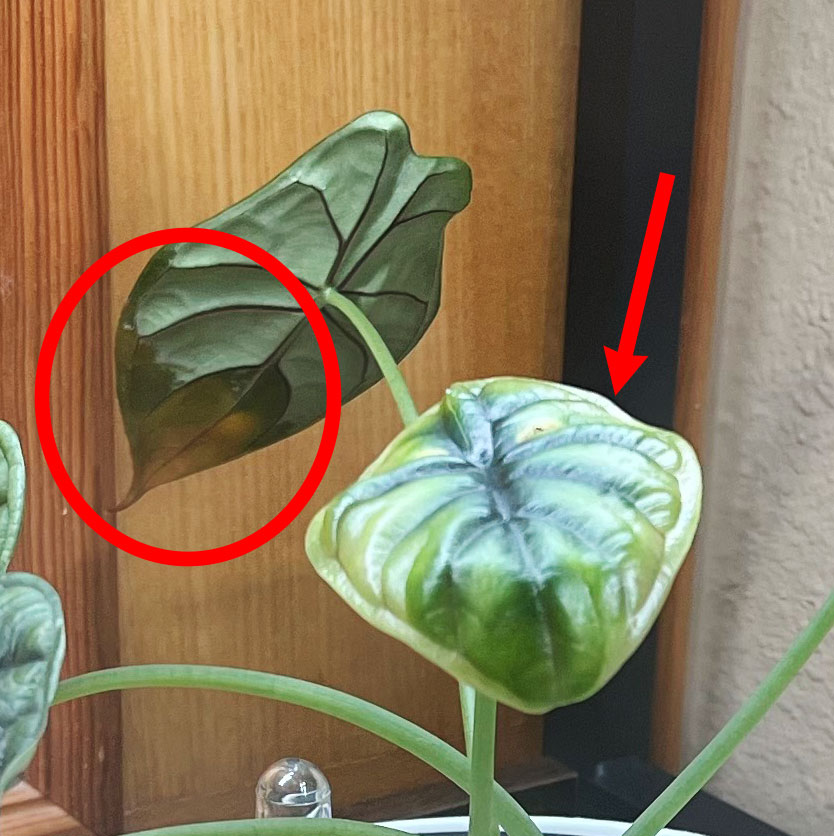
Drogon’s problems began well before our trip. He had always dripped water from his leaves, but that can be normal for some Alocasia. What I failed to pay attention to was his newest leaf yellowing (see arrow), and other leaves with damage on their underside (see circle). Both of these symptoms pointed directly at too much water. But wait, he was in PON, I wasn’t supposed to be able to over-water him.
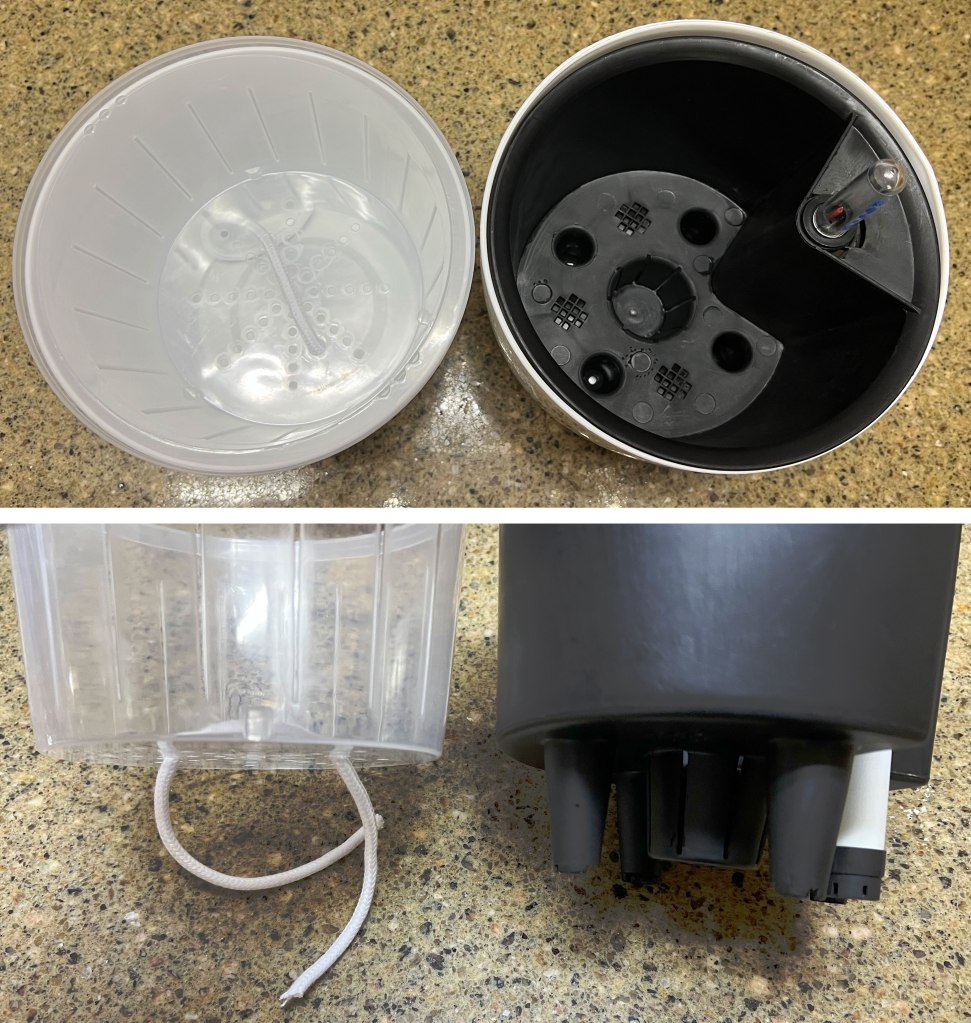
Let’s take a minute to talk about self-watering pots. Self-watering pots are comprised of an inner pot with lots of drainage and holes or slits for airflow. I have two types of self-watering pots: one holds water under the inner pot with wicks to draw the water up into the substrate (left). The other type has “legs” that sit in the water with the substrate (PON) inside. The substrate in the legs then draws the water up toward the roots (right).
The self-watering pot on the right is the pot Drogon was in. My theory is that I over-thought the process. I had seen a video where the wick had been drawn up into the substrate to ensure the roots had plenty of water. I knew that Drogon’s pot didn’t have any wicking, so I added wicks, starting them down inside the legs and working them up through the substrate. I didn’t let the pot do its work. I believe that the wicking was keeping the PON too moist.
While we were in London, on the last leg of our trip, my niece sent me a photo of Drogon and all of his leaves were yellowing and drooping. By the time we got home, only one remained and it was mushy and had to be removed. I also took him out of his pot and removed the bad, mushy roots and put him in a smaller pot.
A few days later, I found that the top of the rizome was mushy… stem rot. I scraped off the mush and covered it with cinnamon and I’m hoping for the best. A few days ago, I saw a new leaf popping up. I may be starting from scratch with him, but at least he’s still with me.
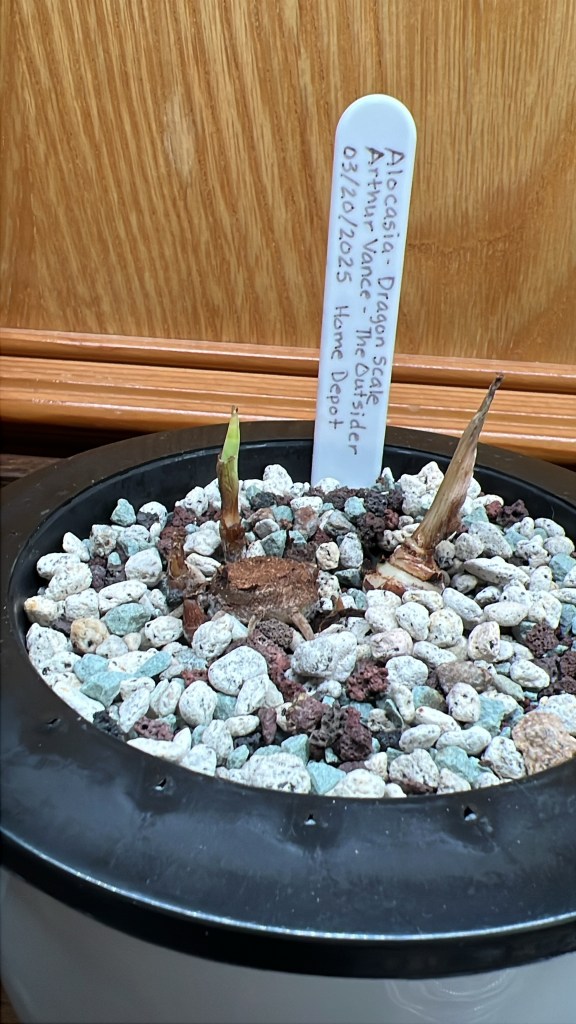
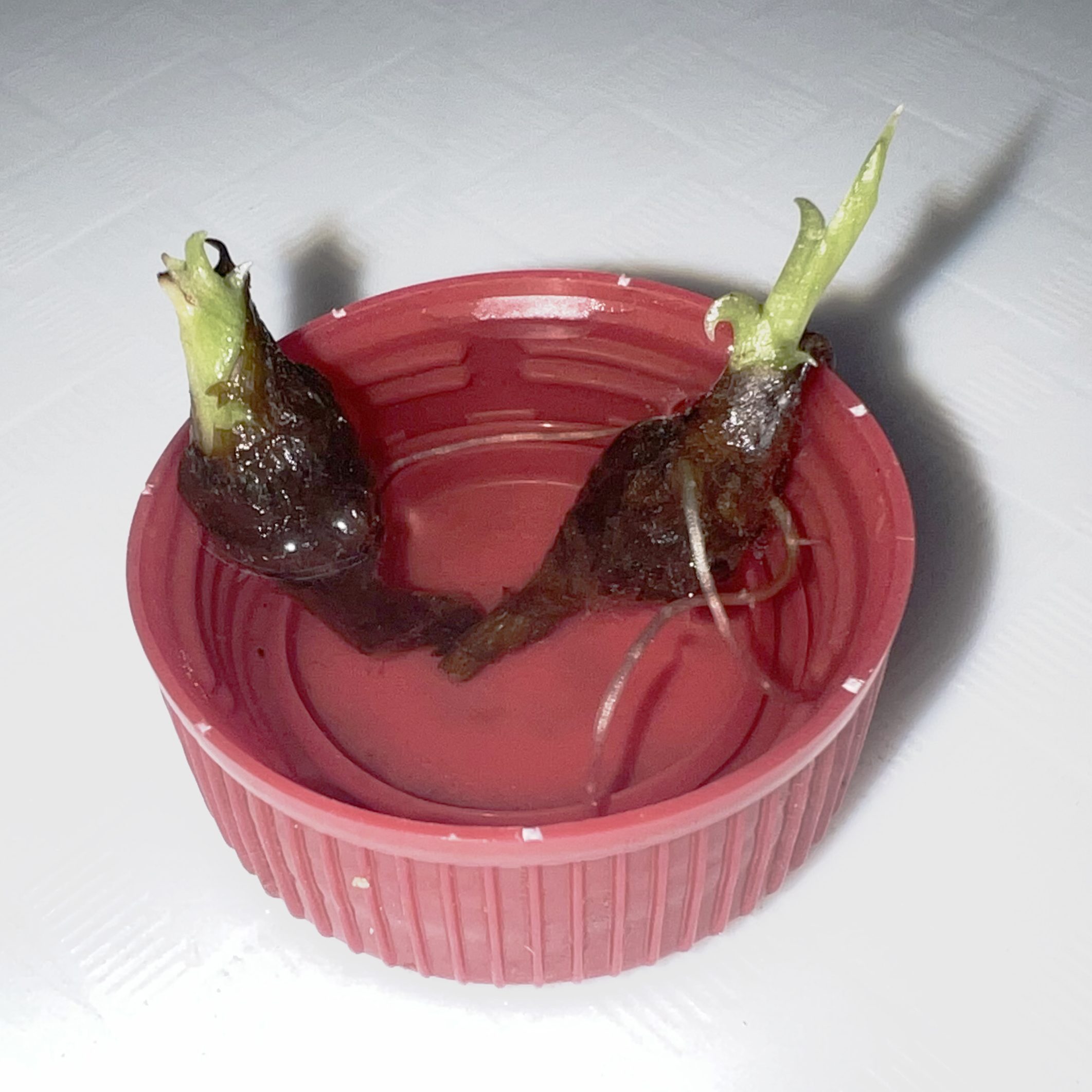
Meanwhile, a couple of months ago, I think it was when I added the wick to his pot, I found two corms and they are both sprouting! I should have two new Alocasia Dragon Scale plants early next year.
The moral of my story is this: If something seems wrong on top, there’s probably something going on down under. Don’t ignore the sypmtoms.
 my Plants
Leave a comment