
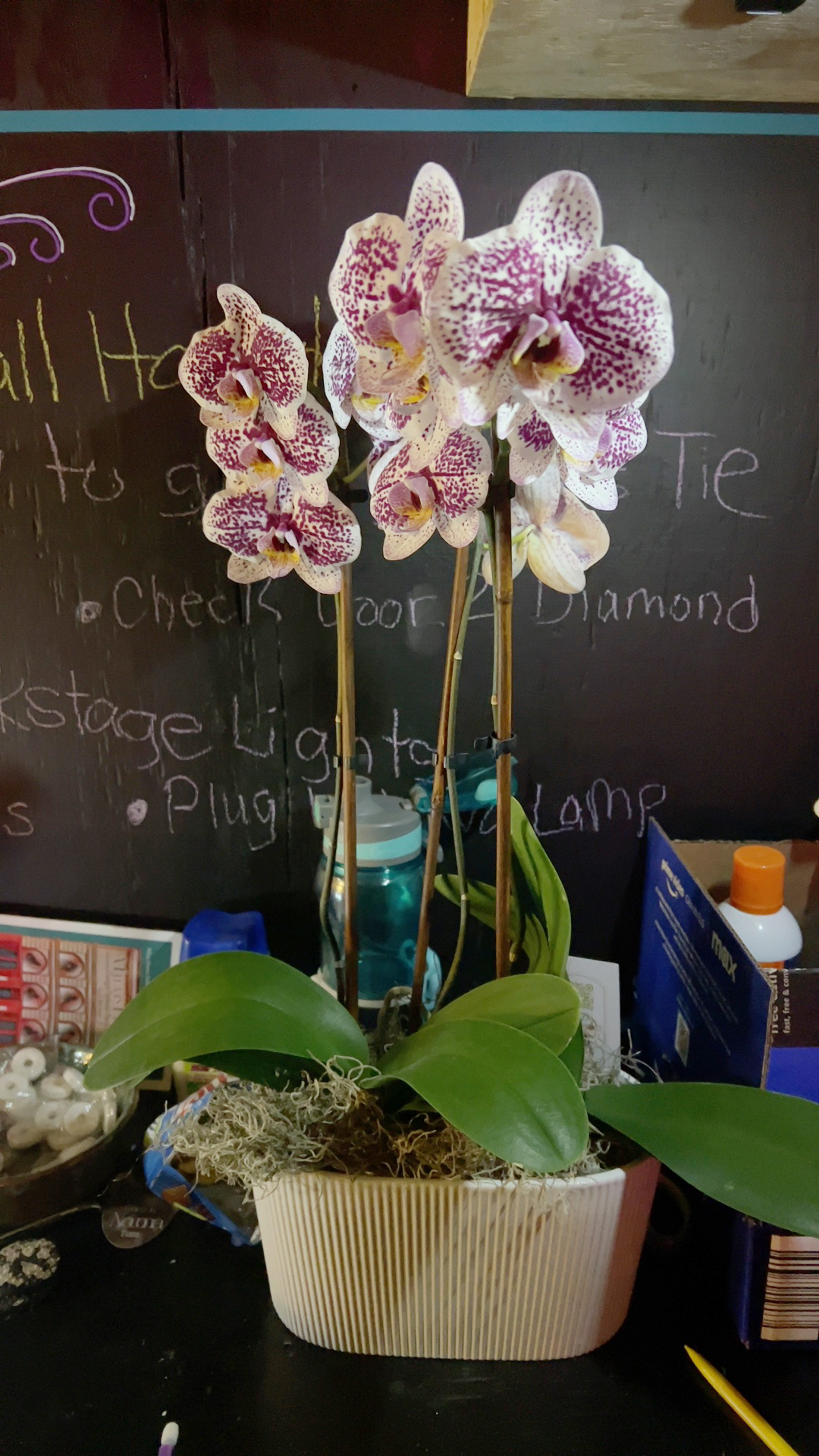
I was gifted not one, but two orchids by the director of a theatrical production that I stage managed and created the lighting design for. It was called A Flea In Her Ear and was the story of two doppelgangers: Poche and Chandebise. As names evolved for my orchids, I decided they would all be named after characters from the plays that I worked on. Since these were “twins” of a sort, I knew they needed to be Poche and Chandebise.
My director passed on care instructions from his wife and told me to just add a few ice cubes once a week. I didn’t know much about plants but ice cubes sounded like a TikTok hack, so I began searching for instructions on how to care for orchids. What I found was that there are many differing opinions on what is the best way to grow these beautiful plants… and the methods varied greatly from expert to expert.
My early searches for information led to the person who would become my go-to for orchid information: Miss Orchid Girl. Not only did she have beautiful, flowering orchids of every variety known to man, she knew a LOT about them. She had obviously done her research and seemed to understand the very psyche of them.
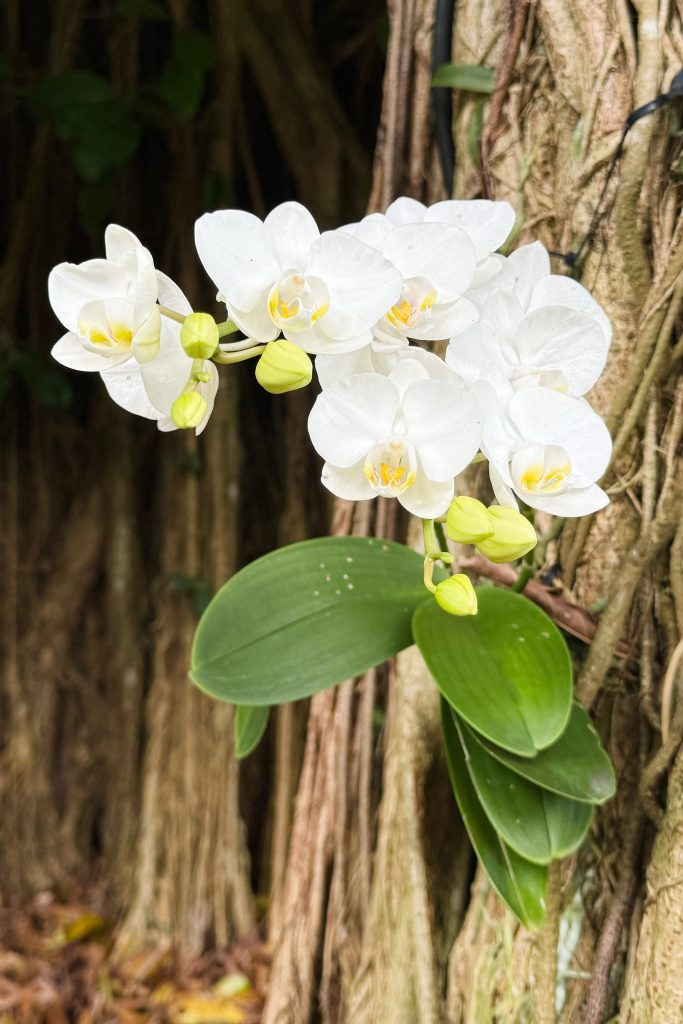
I learned that my orchids were Phalaenopsis Tropic Ocelot orchids and that they grow in the wild in tropical climates. They also do not grow in the ground; they grow clinging to trees. Not only do they need water, they need air, and lots of it. For this reason, orchid flower pots have holes in the sides to allow air to flow in and around the roots. They also grow in many different mediums ranging from sphagnum moss, to bark, to coconut husks, but they do not grow in soil. Which medium they will grow best in depends on the climate where they are being grown.
I live near Dallas, Texas where it is warm and somewhat humid, though not tropically so. Sphagnum moss soaks up moisture like a sponge and is great for moving moisture throughout a plant’s root system, but moss alone would keep orchid roots too wet and they could be prone to rot. Coconut husks will work, but as the roots grow, they can become entangled in the husks, making the plant difficult to repot when the time comes. Bark alone is great for getting air to the root system, but it does not hold moisture well which means more frequent watering.
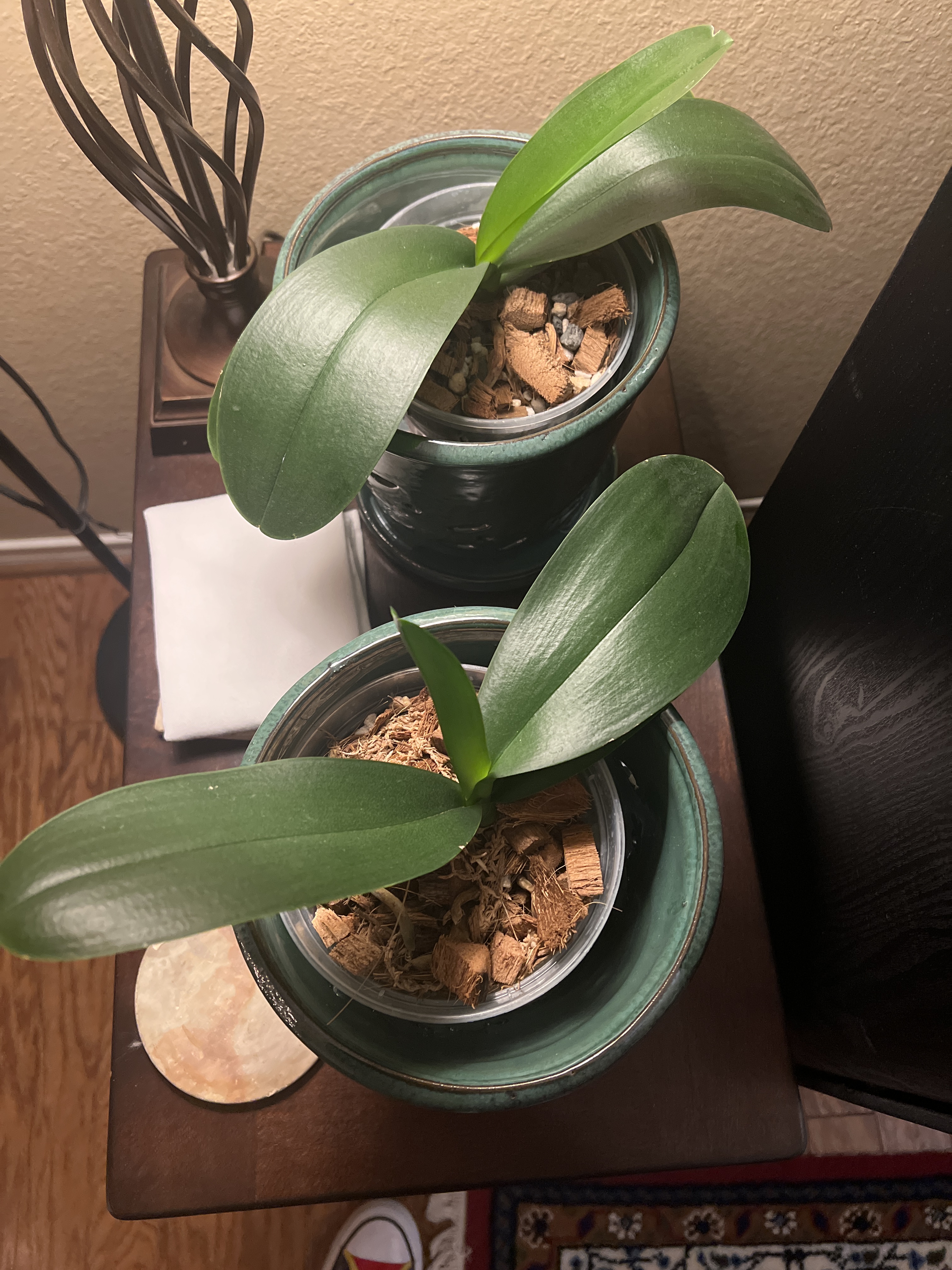
I purchased an orchid mix with bark and sphagnum moss, along with a couple ceramic pots with holes as well as inner clear plastic pots to keep the bark from falling through the holes in the ceramic pots.
I was able to get Poche and Chandebise settled into their new pots and placed them near an eastern-facing window. By October, both orchids had new leaves beginning to grow.
Poche and Chandebise were thriving and in December their new leaves were maturing and almost fully grown.
 my Plants
Leave a comment